PS2.1 | Jupiter’s icy moons: where we are, and where Europa Clipper and Juice can take us
Jupiter’s icy moons: where we are, and where Europa Clipper and Juice can take us
Convener: Martin Volwerk | Co-conveners: Gabriel Tobie, Audrey Vorburger, Anezina Solomonidou
Orals
| Tue, 05 May, 14:00–17:55 (CEST)
 
Room 0.94/95
Posters on site
| Attendance Wed, 06 May, 10:45–12:30 (CEST) | Display Wed, 06 May, 08:30–12:30
 
Hall X4
Orals |
Tue, 14:00
Wed, 10:45
Jupiter’s icy moons – Europa, Ganymede, and Callisto – are at the center of planetary science curiosity, particularly in the search for habitability in the solar system. In this context, ESA’s Jupiter Icy moons Explorer (Juice) is on its way to the Jovian system after its successful Venus gravity assist in August 2025 and is joined by NASA’s Europa Clipper following its launch in October 2024 and its Mars flyby in March 2025.

This session invites contributions from the science community related to these two missions’ objectives. This includes, but is not limited to, better understanding of Jupiter icy moons’ surface properties, internal structures and dynamics of their subsurface oceans, as well as implications for habitability. The session will also cover the moons’ complex interactions with the space environment and their dynamic evolution within the Jovian system. Finally, abstracts related to observations and future science opportunities during cruise are also welcome.

As we reflect on this unique opportunity of having two spacecrafts in the Jovian system at the same time, the session will highlight the scientific opportunities offered by each mission as well as by the dual-spacecraft configuration, emphasizing the synergistic potential of Europa Clipper and Juice.

Orals: Tue, 5 May, 14:00–17:55 | Room 0.94/95

The oral presentations are given in a hybrid format supported by a Zoom meeting featuring on-site and virtual presentations. The button to access the Zoom meeting appears just before the time block starts.
Chairpersons: Martin Volwerk, Anezina Solomonidou, Audrey Vorburger
14:00–14:10
|
EGU26-21114
|
Highlight
|
Virtual presentation
Claire Vallat, Nicolas Altobelli, and Olivier witasse

The JUpiter ICy moons Explorer (JUICE) is the European Space Agency’s first large-class mission under the Cosmic Vision 2015–2025 program. The spacecraft was launched in April 2023 and is currently travelling toward Jupiter, where it is expected to arrive in July 2031 following an eight-year cruise through interplanetary space. JUICE is equipped with ten advanced scientific instruments dedicated to geophysical, in-situ, and remote-sensing investigations, along with the Planetary Radio Interferometer and Doppler Experiment (PRIDE) and a radiation monitor.

The mission is designed to assess the potential for habitable conditions on the Jupiter’s icy moons Europa, Callisto, and Ganymede, while also examining the Jovian system as a whole and the complex interactions that occur within it. Ganymede, the largest moon in the Solar System, is the primary focus of JUICE because of its suitability as a natural laboratory for the study of icy bodies and ocean worlds as well as the presence of its intrinsic magnetic field. Observations of Europa and Callisto will also enable comparative studies across the Galilean satellite system. At the time of writing, JUICE has completed approximately one third of its journey to Jupiter. During that time, the payload has already been activated several times and acquired many scientific data, notably during the double Earth-Moon gravity assist in Summer 2024 but also more recently during the flyby of comet 3I/ATLAS in November 2025, while the comet was close to its perihelion. After less than 3 years in space, the scientific relevance of the JUICE data expands well above the mission objectives and already provides important contributions to heliophysics, Earth, Moon and (interstellar) cometary science. 

This presentation will outline the mission’s scientific goals, summarize key activities and results carried out during the cruise to date, describe the current mission status, and highlight the planned activities for the remainder of the cruise phase, in particular the upcoming second Earth Gravity Assist.  

How to cite: Vallat, C., Altobelli, N., and witasse, O.: The ESA Jupiter Icy moons Explorer (JUICE): mission status and upcoming activities , EGU General Assembly 2026, Vienna, Austria, 3–8 May 2026, EGU26-21114, https://doi.org/10.5194/egusphere-egu26-21114, 2026.

14:10–14:20
|
EGU26-7780
|
On-site presentation
Haje Korth, Robert Pappalardo, and Bonnie Buratti

The arrival of NASA's Europa Clipper at the Jovian system in the coming years marks a pivotal moment for ocean world science. While the mission is designed to transform our understanding of Europa's habitability, cruise phase operations are already delivering important progress toward maturing operations concepts, validating instrument performance, and enabling early synergistic measurements that will strengthen the eventual science return.

The Europa Clipper spacecraft was launched on 14 October 2024 and executed a gravity assist maneuver at Mars on 1 March 2025, which enabled early tests of three key investigations. E-THEMIS observed Mars to validate a nonlinearity correction algorithm. REASON conducted its first complete end-to-end test at closest approach, which had not been possible before launch due to system integration constraints. G/RS evaluated flyby tracking procedures using open-loop receivers from NASA's Deep Space Network. Following successful completion of all Mars activities, the Europa-UVS instrument observed interstellar comet C/2025 N1 ATLAS near its Earth closest approach on 6 November 2025, from a distance of about one astronomical unit. The acquired data served to calibrate the instrument and provided information on the comet’s composition.

Before entering the Jovian system in 2030, the spacecraft will perform a second and final gravity assists at Earth on 3 December 2026 to target Jupiter. The Earth flyby will allow the only post-launch absolute calibration of the Europa Clipper Magnetometer (ECM) using Earth’s magnetic field. It will also support cross-calibration of PIMS through comparison with data from other near-Earth spacecraft. Under consideration are additional activities, which would be valuable to test operations of multiple instruments and spacecraft system in parallel. Throughout cruise, periodic checkouts verify functionality and, in some cases, enable unique scientific measurements in the heliosphere.

Coordination with ESA's JUICE mission has created potential for synergistic science that could enhance our understanding of solar wind dynamics and Jovian system interactions. Together, these activities lay the foundation for fully calibrated payload, which is essential to achieving Europa Clipper's overarching goal of evaluating Europa’s habitability.

How to cite: Korth, H., Pappalardo, R., and Buratti, B.: Slingshot Prep: Europa Clipper Gets Ready to Borrow a Little Speed from Earth, EGU General Assembly 2026, Vienna, Austria, 3–8 May 2026, EGU26-7780, https://doi.org/10.5194/egusphere-egu26-7780, 2026.

14:20–14:30
|
EGU26-21237
|
On-site presentation
Pontus Brandt, George Clark, Peter Kollmann, Don Mitchell, Leonardo Regoli, Matina Gkioulidou, Stas Barabash, Frederic Allegrini, Peter Wurz, Norbert Krupp, Elias Roussos, Carol Paty, Xianzhe Jia, Krishan Khurana, Nicolas Andre, and Drew Turner

ESA’s JUpiter ICy moons Explorer (JUICE) mission performed the world’s first Lunar-Earth flyby on the 19-20 of August 2024, successfully rerouting the spacecraft toward Venus for another gravity assist. In October and November 2025 the JUICE payload also attempted observations of the interstellar comet 3i/ATLAS. In this presentation, we focus on observations obtained from the Jupiter Energetic Neutrals and Ions (JENI) camera and the Jovian Energetic Electron (JoEE) magnetic spectrometer, which are a part of the comprehensive JUICE Particle Environment Package (PEP).            

The Lunar-Earth flyby brought JUICE to within ~750 km of the Moon’s surface and ~6,840 km over Earth. JUICE flew through Earth’s magnetotail visiting the plasma sheet, ring current, and radiation belt regions, before exiting the magnetosphere along the flank bringing the spacecraft back into the solar wind. JENI and JoEE made direct measurements of the energetic ions (~1 keV to several MeV) and electrons (~30 keV to 2 MeV) in those magnetospheric regions. During its outbound leg of the trajectory, JENI captures high-resolution images of Earth’s dynamical ring current. Several substorm injections of hot plasma were observed in Earth’s nightside.

In the period 8-19 November was allowed to be on attempting ENA imaging of 3i/ATLAS and data will be downlinked by February 2026. In this presentation, we report on these exciting observations captured by JUICE discuss the instrument performance of JENI and JoEE.

How to cite: Brandt, P., Clark, G., Kollmann, P., Mitchell, D., Regoli, L., Gkioulidou, M., Barabash, S., Allegrini, F., Wurz, P., Krupp, N., Roussos, E., Paty, C., Jia, X., Khurana, K., Andre, N., and Turner, D.:  Results from ESA’s JUICE Cruise: ENA Imaging and In-Situ Charged Particle Measurements During Lunar-Earth Gravity Assist and the 3i/ATLAS Observation Window, EGU General Assembly 2026, Vienna, Austria, 3–8 May 2026, EGU26-21237, https://doi.org/10.5194/egusphere-egu26-21237, 2026.

14:30–14:40
|
EGU26-3
|
On-site presentation
Arnaud Beth, Marina Galand, Xianzhe Jia, François Leblanc, and Ronan Modolo

Previous flybys by NASA missions, namely Galileo and Juno, revealed that Ganymede, the largest moon of the Solar System, hosts a rather complex, dense ionosphere, more diverse than previously thought. Recent modelling work has [1] highlighted that ion-neutral chemistry (e.g. H2++H2 ->H3+ + H) occurs and was effective at producing new ion species such as H3O+ and H3+, the latter being detected during Juno flyby. However, these results raise more questions regarding the ability of Juice to characterise Ganymede's ionosphere: 

  • Can the different instruments onboard JUICE accurately probe these ion species?
  • Can ion species be distinguished and measured within the performance capability of the plasma instruments?

In addition, as ion-neutral collisions appear to be efficient, as evidenced by H3+ detection, another fundamental question arises. Collisions within a plasma affect its conductivity. Depending on its strength, it may affect our ability to characterise the internal structure of Ganymede if not properly constrained.

In this presentation, we propose characterising Ganymede's ionosphere for different configurations, exploring a range of conditions met during the JUICE mission. First, we simulate the ion number densities and ion energy spectra expected to be measured by instruments at JUICE’s location. Secondly, we will estimate Ganymede's ionosphere conductivity for different conditions and assess whether its contribution to the total system is critical.

[1] A Beth, M Galand, X Jia, F Leblanc, Ion-neutral chemistry at icy moons: the case of Ganymede, Monthly Notices of the Royal Astronomical Society, 2025;

How to cite: Beth, A., Galand, M., Jia, X., Leblanc, F., and Modolo, R.: Characterisation of Ganymede's ionosphere in the context of future JUICE in situ plasma observations, EGU General Assembly 2026, Vienna, Austria, 3–8 May 2026, EGU26-3, https://doi.org/10.5194/egusphere-egu26-3, 2026.

14:40–14:50
|
EGU26-9463
|
ECS
|
On-site presentation
Lorenzo Obersnel, André Galli, Rico G. Fausch, Rafael Ottersberg, and Peter Wurz

Due to the lack of a dense atmosphere, the icy moons of Jupiter are directly exposed to a harsh radiation environment. Precipitating energetic particles contribute to the formation of the thin atmospheres of the moons and process the upper layer of their surfaces[1]. Radiolytically produced molecules can remain trapped in the ice. In particular, molecular oxygen and ozone have been observed in the surfaces of Ganymede[2] and other icy moons. We conducted laboratory experiments irradiating regolith pure water ice samples with electrons, simulating the processing of the icy moons’ surfaces. The ice regolith[3] was produced to closely emulate the physical properties expected on the surface of the Galilean icy moons, in terms of grain size (~67 μm) and temperature (90±5 K). Using a time-of-flight mass spectrometer similar to the Neutral and Ion Mass Spectrometer on board Jupiter Icy Moons Explorer, we analysed the species radiolytically produced and sputtered from the ice.

We observed that ozone is produced in the ice regolith during 10 keV irradiations. Part of the produced ozone is stored in the ice. We give an estimate of the production of O3, with respect to the radiolytically produced O2. Preliminary results appear to show that ozone production depends on the grain size of the regolith ice.

[1] Vorburger, Audrey, and Peter Wurz. "Europa’s ice-related atmosphere: the sputter contribution." Icarus 311 (2018): 135-145.

[2] Noll, Keith S., et al. "Detection of ozone on Ganymede." Science 273.5273 (1996): 341-343.

[3] Pommerol, Antoine, et al. "Experimenting with mixtures of water ice and dust as analogues for icy planetary material: recipes from the ice laboratory at the University of Bern." Space science reviews 215 (2019): 1-68.

How to cite: Obersnel, L., Galli, A., Fausch, R. G., Ottersberg, R., and Wurz, P.: Ozone production by electron irradiation of regolith ice, EGU General Assembly 2026, Vienna, Austria, 3–8 May 2026, EGU26-9463, https://doi.org/10.5194/egusphere-egu26-9463, 2026.

14:50–15:00
|
EGU26-15367
|
On-site presentation
Sascha Kempf, Jordy Bouwman, John Fontanese, Hsian-Wen Hsu, Marshall Seaton, and Camille Yoke

Impact mass spectrometers such as the Cosmic Dust Analyser (CDA) on board the Cassini spacecraft have proven invaluable in determining the composition of the surfaces from which detected particles originate. However, connecting impact mass spectra with the composition of the striking particle is not straightforward and requires laboratory impact spectra of particles of known composition and speed. Such data has so far been acquired for minerals, some organic materials and water ice. In this study, we present cation and anion impact mass spectra of aluminum and iron particles striking ammonia ice, a possible surface component of outer solar system bodies such as Europa, Ariel, and Pluto. To reduce ambiguity in the mass lines appearing in the spectra, we performed impact experiments with 14NH3 and 15NH3 ice.

The resulting impact mass spectra demonstrate only a slight dependence on impact speed. The cation impact spectra are dominated by protonated ammonia cluster ions, (NH3)NH4, the abundance of which decreases monotonically with cluster size. Consistent with data obtained from gas-phase mass spectrometry experiments involving ammonia clusters, (NH3)4NH4 clusters are overabundant in impact mass spectra at all impact speeds, suggesting that these clusters possess a particularly stable geometric configuration. This finding implies that cluster formation in hypervelocity experiments is well described by gas-phase chemistry. Unlike water ice, well-formed ammonia cluster impact mass spectra can be obtained at impact speeds as low as 1 km/s. This suggests that ammonia deposits could be detected even by instruments in low orbits around icy moons such as Ganymede.

We performed Monte Carlo simulations to verify whether the potential ammonia deposits on Europa, as identified in Galileo IR data by Emran (2026), can be detected by the Surface Dust Analyzer (SUDA) impact mass spectrometer on board the Europa Clipper spacecraft [6]. This spacecraft will conduct 49 low altitude Europa flybys starting in 2030. Our simulations clearly demonstrate that, if present, such deposits will be unambiguously identified.

How to cite: Kempf, S., Bouwman, J., Fontanese, J., Hsu, H.-W., Seaton, M., and Yoke, C.: How to Detect Ammonia Ice Deposits on Europa's Surface with SUDA on Europa Clipper., EGU General Assembly 2026, Vienna, Austria, 3–8 May 2026, EGU26-15367, https://doi.org/10.5194/egusphere-egu26-15367, 2026.

15:00–15:10
|
EGU26-16053
|
ECS
|
On-site presentation
Camille Yoke, Jordy Bouwman, John Fontanese, Sean Hsu, Marshall Seaton, Grace Owens, Tobin Munsat, and Sascha Kempf

Impact ionization time-of-flight (TOF) mass spectrometry has been shown to be a powerful in situ technique for analyzing the composition of icy bodies in the outer Solar System, providing information inaccessible to remote sensing alone. Instruments such as the SUrface Dust Analyzer (SUDA) aboard Europa Clipper will sample ice grains in Europa’s exosphere, enabling compositional mapping of Europa's surface. Interpretation of these measurements is complicated by the physics of hypervelocity impacts, as fragmentation pathways, ion clustering, and relative ion yields depend strongly on both impact velocity and target composition. Reliable interpretation of spacecraft data, including measurements from Cassini’s Cosmic Dust Analyzer, therefore requires high-fidelity laboratory analogue experiments.

Here we present laboratory TOF mass spectra generated from hypervelocity dust impacts into cryogenic ice targets using the dust accelerator facility at the University of Colorado Boulder. These experiments produce reference spectra from known ice compositions that serve as analogue datasets for spaceborne measurements. The materials investigated include ammonia ices, carbon dioxide ices, and salt-rich water ices, all of which have been proposed as relevant to Europa’s icy shell.

A central advancement of this work is the use of isotopically labeled ice compositions to reduce ambiguity in spectral interpretation. By generating spectra from 15NH3 and 13CO2 ices, predictable mass shifts are observed in diagnostic ion and cluster peaks originating from the impacted material. These shifts provide direct confirmation of molecular contributions within complex spectra and significantly improve confidence in peak assignments.

The experiments were conducted by accelerating micron-scale dust particles to velocities of 1-50 km s-1 and impacting them into thin ice films grown under ultra-high vacuum on cryogenically cooled substrates. Volatile ices were deposited from high-purity gases. And salt-rich water ices were produced from aerosolized liquid particles using novel operating conditions. Impact-generated plasmas were analyzed using TOF mass spectrometry. Isotopically labeled datasets were used to confirm molecular assignments via predictable mass shifts.

These results demonstrate that laboratory analogue measurements can reproducibly capture composition-dependent features in impact ionization spectra across a wide range of relevant velocities. Ammonia-bearing ices provide a useful test case for isotopic validation. Our early results indicate that this approach is broadly applicable to diverse icy-world compositions. Ongoing and future work will expand this reference database to additional salts and isotopically marked water ice, chemical compositions relevant to Europa and other ocean worlds.

How to cite: Yoke, C., Bouwman, J., Fontanese, J., Hsu, S., Seaton, M., Owens, G., Munsat, T., and Kempf, S.: Interpreting Impact Ionization Spectra From Icy Worlds, EGU General Assembly 2026, Vienna, Austria, 3–8 May 2026, EGU26-16053, https://doi.org/10.5194/egusphere-egu26-16053, 2026.

15:10–15:20
|
EGU26-5454
|
On-site presentation
Wei-Ling Tseng, Ian-Lin Lai, Hsiang-Wen Hsu, Wing-Huen Ip, and Jong-Shinn Wu

Jupiter's moon Europa is a primary target for astrobiological investigation, exhibiting a complex surface potentially linked to its internal ocean through tidal activity and plume outgassing. While some astronomical observations and Galileo plasma data suggest the presence of active plumes, their specific dynamics remain poorly understood. This study characterizes the transport of icy dust entrained within water vapor plumes to better understand the exchange between Europa's subsurface and surface.

We employ the Direct Simulation Monte Carlo (DSMC) method to model plume structures across a range of initial eruption velocities and gas production rates. By integrating these gas-phase results with dust trajectory modeling, we quantify the influence of gas drag on particle distribution. Our results demonstrate a clear size-sorting mechanism: fine particles (0.001–0.1 μm) undergo wide-scale dispersion, whereas coarser grains (0.1–10 μm) settle preferentially near the vent (Tseng et al., 2025). Notably, at a high outgassing rate (~10²⁹ molecules/s), gas drag becomes the primary driver of dust motion, effectively decoupling the final deposition pattern from initial ejection velocity. These findings provide a framework for interpreting surface morphology and offer predictive constraints for upcoming observations by the JUICE and Europa Clipper missions.

How to cite: Tseng, W.-L., Lai, I.-L., Hsu, H.-W., Ip, W.-H., and Wu, J.-S.: Size-Dependent Fallout of Icy Grains in Europa’s Water Vapor Eruptions, EGU General Assembly 2026, Vienna, Austria, 3–8 May 2026, EGU26-5454, https://doi.org/10.5194/egusphere-egu26-5454, 2026.

15:20–15:30
|
EGU26-14922
|
On-site presentation
Paul Hayne, Kya Sorli, and Richard Cartwright
The bulk of Europa's crust is dominated by water ice. Emplacement of internally derived hydrated salt minerals and production of sulfuric acid hydrates through the action of the jovian magnetosphere result in spatial variations in the non-ice surface composition. Recent observations from the James Webb Space Telescope (JWST) suggested the presence of H2O ice in both crystalline and amorphous form, with evidence for rapid (~10 day) recrystallization of ice in some regions and the dominance of amorphization via plasma sputtering in others (Cartwright et al., 2025, PSJ). Sublimation and sputtering may also supply water to the exosphere, through which it is transported ballistically to other regions on Europa. Here, we use a 3D thermophysical model with coupled sputtering and exosphere transport models to examine the redistribution of water and its effect on Europa's surface composition.
 
Our results indicate that for a surface with initial non-ice concentrations of a few percent, sublimation dominates ice ablation at the low- to mid-latitudes, with net accumulation at the poles. Sputtering (also a temperature-dependent process) accounts for a few percent of net ice ablation. On diurnal to annual timescales, a prominent spatial pattern of ice concentration develops: 1) depletion of ice (enrichment in non-ice) at the equator relative to both the mid-latitudes and the polar regions, and 2) a longitudinal variation with higher ice concentrations (less ablation) at the subjovian hemisphere. The latter effect is due to the daily solar eclipse of Europa by Jupiter, which suppresses local noontime peak temperatures along with sublimation and sputtering rates. In addition to the thermophysical and ice transport results, we will present rates and spatial patterns of amorphization and thermal recrystallization to better understand the JWST observations.

How to cite: Hayne, P., Sorli, K., and Cartwright, R.: Thermal Redistribution and Recrystallization of Ice on Europa's Surface, EGU General Assembly 2026, Vienna, Austria, 3–8 May 2026, EGU26-14922, https://doi.org/10.5194/egusphere-egu26-14922, 2026.

15:30–15:40
|
EGU26-17027
|
On-site presentation
Roland J. Wagner, Katrin Stephan, Thomas Kenkmann, Namitha Rose Baby, Thomas Roatsch, Elke Kersten, and Pasquale Palumbo

Two spacecraft were launched recently to reach Jupiter and its satellites: (1) ESA’s JUICE Mission (Apr. 14, 2023) and (2) NASA’s Europa Clipper (Oct. 14, 2024). The latter spacecraft is planned to be inserted into Jupiter orbit Apr. 11, 2030 [1]. JUICE will be inserted into Jupiter orbit in 2031 [2], and in 2034 in orbit about the largest satellite Ganymede [2]. While Europa Clipper will focus on intensely studying Europa, JUICE will concentrate on the two largest satellites Ganymede and Callisto. These three satellites are characterized by a wide range of geologic units: Callisto is dominated by old, dark densely cratered plains [3], whereas the surface of Europa is comparably young and dominated by intensely tectonized regions [4]. Ganymede shows both older dark cratered plains and younger light tectonically altered terrains [5]. The true ages of these surface features are still unknown, but age estimations have been carried out, based on measuring crater distributions since the late 1970ies, in Voyager and Galileo SSI imaging data [e.g., 6]. In this study, we continue our work on cratering model age estimations by applying an updated impact chronology scenario [7][8]. The dominant impactors on the surfaces of the Jovian satellites are short-period comets from the Kuiper Belt in the Outer Solar System, termed ecliptic comets (ECs) [7]. In the updated impact chronology, two scenarios, although with high degrees of uncertainties, are discussed [7]: (a) impacts preferentially without disruption of the impactors, and (b) impacts predominantly with disruption. Applying these two scenarios, cratering model ages are obtained from crater distributions on specific geologic terrains. For Ganymede, significantly higher surface ages for specific terrain types – model ages several 100 Myr older – can be derived from the disrupted comet impact scenario compared to a previous version of the chronology [8][9], while changes in model ages are minor for the scenario without comet disruption. Similarily, crater model ages were also found to be higher for geologic units on Callisto in this study, taking into account disrupted comets. The disrupted comet scenario also infers higher model ages for terrains on Europa compared to previous estimates [9]. We will use these model chronology and future updates for geologic studies based on the images returned by the JANUS Camera aboard the JUICE spacecraft. REFERENCES: [1] Pappalardo, R. T. et al.: EGU25-7629 (abstr.), 2025. [2] Vallat, C. et al.: EGU25-21485 (abstr.), 2025. [3] Moore, J. M. et al., in: Bagenal, F. et al. (Eds.), Jupiter, Cambridge Univ. Press, p. 397-426, 2004. [4]. Dogget, T. et al., in: Pappalardo, R. T. et al. (Eds.), Europa, Univ. of Arizona Press, Tucson/Az, p. 137-159, 2009. [5] Jaumann, R. et al., in: Volwerk, M. et al. (Eds.), Ganymede, Cambridge Univ. Press, p. 59-74, 2025. [6] Kirchoff, M. R. et al., in: Volwerk, M. et al. (Eds.), Ganymede, Cambridge Univ. Press, p. 104-125, 2025. [7]. Nesvorný, D. et al., Planet. Sci. J. 4:139, 2023. [8] Wagner, R. J. et al., EPSC-DPS abstr. EPSC-DPS2025-2086, 2025. [9] Zahnle, K. et al., Icarus 163, 263-289, 2003.

How to cite: Wagner, R. J., Stephan, K., Kenkmann, T., Rose Baby, N., Roatsch, T., Kersten, E., and Palumbo, P.: Surface ages of the icy Galilean satellites of Jupiter using an updated impact cratering chronology model, EGU General Assembly 2026, Vienna, Austria, 3–8 May 2026, EGU26-17027, https://doi.org/10.5194/egusphere-egu26-17027, 2026.

Coffee break
Chairpersons: Martin Volwerk, Anezina Solomonidou, Audrey Vorburger
16:15–16:25
|
EGU26-6813
|
ECS
|
On-site presentation
Kaiyi Dai, Kai Wünnemann, Ana-Catalina Plesa, Davide Izzo, Robert Luther, Randolph Röhlen, Thomas Davison, and Hauke Hussmann

Europa is one of the prime targets for astrobiological exploration in upcoming years. Beneath its ice shell, Europa harbors a global subsurface ocean. Habilibility on the icy moons depends critically on the exchange of material between the oxidant-rich surface and the subsurface ocean. Impact cratering represents a primary mechanism for facilitating this ocean-surface exchange, either by directly breaching the ice shell to create transient water pathways or by fracturing and weakening the crust to facilitate surface material transport.

Full impact penetration events and subsequent impact-induced weak zones are strongly dependent on the ice shell structure and thickness. Europa’s ice shell thickness remains controversial, with estimates ranging from 1 to 47 km [1-2]. Recent numerical modeling of Callanish and Tyre multiring impact basins [3] has suggested an ice shell thickness exceeding 20 km, with a conductive lid of 6 to 8 km.

We employ the iSALE-3D shock physics codes [4-6] to simulate crater formation and determine the criteria for full ice shell penetration. We use the tabular 5-phase Equation of State (EOS) for water-ice [7] to describe physical changes under expanding temperature and pressure,  and compare these results with the derived analytical EOS which was adopted by most of previous research. We cover a wide parameter space, ranging from vertical (90°) to highly oblique (15°) impacts, with undifferentiated stony and icy impactors (1000 - 2700kg/m3) ranging from 50 m to 6 km in diameter. The mean impactor velocity at Europa is 26 km/s, and we include a broader impactor velocity range (5 - 40km/s). Furthermore, we also vary the ice shell thickness (up to 50km) to cover various geophysical scenarios. To accurately quantify material fragmentation and to trace impactor material, we utilize a newly developed disruption tracking module by [8].

Our results demonstrate that the threshold for full penetration, and thus the direct exchange,  is heavily dependent on the impactor-to-target size ratio and impact velocity. We find that impact angle governs total amount of  melt generation and highly oblique impacts cause shear heating and frictional melting. Additionally, we quantify the amount of subsurface ocean material transported to the surface and map the distribution of resulting thermal anomalies. 

In future work, we will couple geophysical modeling with our impact-induced thermal anomaly. We will also characterize the shear failure zones and fracture networks generated by impacts. These results can provide constraints for geophysical investigations and identify local gravity anomalies which are potentially detectable by the ESA’s JUICE and NASA’s Europa Clipper missions.

References:

[1] Bray V. J. et al. (2014) Icarus, 231, 394–406.

[2] Howell S. M. (2021) Planet. Sci. J., 2, 129.

[3] Wakita S. et al. (2024) Sci. Adv., 10, eadj8455.

[4] Amsden A. A. et al. (1980) LANL Report LA-8095, 101 pp.

[5] Collins G. S. et al. (2004) Meteorit. Planet. Sci., 39, 217–231.

[6] Wünnemann K. et al. (2006) Icarus, 180, 514–527.

[7] Senft L. E. and Stewart S. T. (2008) Meteorit. Planet. Sci., 43, 1993–2013.

[8] Röhlen R. et al. (2025) Icarus, 431, 116464.

How to cite: Dai, K., Wünnemann, K., Plesa, A.-C., Izzo, D., Luther, R., Röhlen, R., Davison, T., and Hussmann, H.: Breaching the Ice: The Role of Impact Cratering in Facilitating Surface-Ocean Exchange on Europa, EGU General Assembly 2026, Vienna, Austria, 3–8 May 2026, EGU26-6813, https://doi.org/10.5194/egusphere-egu26-6813, 2026.

16:25–16:35
|
EGU26-454
|
ECS
|
On-site presentation
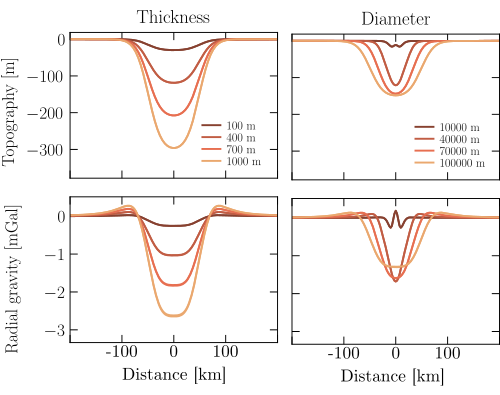
Julia Maia, Pietro Matteoni, Ana-Catalina Plesa, Tina Rückriemen-Bez, Frank Postberg, and Hauke Hussmann

Many surface tectonic features on Europa have been hypothesized to form in response to liquid and brine reservoirs within the ice shell [e.g., Schmidt et al., 2011; Steinbrugge et al., 2020; Matteoni et al., 2023]. Because these reservoirs have higher densities than the surrounding ice, they are negatively buoyant, producing surface deflection and generating topographic and gravity anomalies. Although the existence of such signatures has been proposed [e.g., Schmidt et al., 2011; Michaut and Manga, 2017; Lesage et al., 2025], their expected characteristics have not been systematically quantified.

Here we investigate the topographic and gravitational signals produced by subsurface high-density deposits within Europa’s ice shell. Using both elastic loading models [e.g., Turcotte et al., 1981; Maia and Wieczorek, 2022] and viscous loading models [e.g., Richards and Hager, 1984; James et al., 2013; Maia et al., 2023], we predict the observable signatures generated by such reservoirs. The reservoirs are treated purely as density anomalies; they do not modify the rheology of the surrounding ice. We explore four key reservoir properties: (i) diameters of 10–100 km, (ii) thicknesses of 100–1000 m, (iii) density contrasts of 80–680 kg/m³ relative to water ice, and (iv) depths ranging from 1 km to 80% of the total ice-shell thickness. Figure 1 illustrates how the reservoir thickness and diameter influence the predicted topography and gravity for a 20-km-thick ice shell with a viscous, conductive viscosity profile. In this case the feature has a density excess of 280 kg/m3 and is place at 10 km depth. We also tested alternative shell thicknesses and viscosity structures, but these variations produced only minor changes in the amplitudes and shapes of the modeled signatures.

We find that subsurface reservoirs can produce surface displacements of several hundred meters. These signals are potentially detectable by stereo topography and radar sounding from Europa Clipper, as well as by GALA, the laser altimeter onboard JUICE. On the other hand, the associated gravity anomalies are on the order of a few milligals, and the expected horizontal scales of the features (~100 km) fall below the ∼500 km resolution limit of Europa Clipper’s global gravity field recovery [Mazarico et al., 2023]. Such small-amplitude signals will also be difficult to detect using line-of-sight acceleration from individual flybys, though detectability depends strongly on spacecraft altitude [e.g., James, 2016; Mazarico et al., 2023].

How to cite: Maia, J., Matteoni, P., Plesa, A.-C., Rückriemen-Bez, T., Postberg, F., and Hussmann, H.: Signatures of ice shell heterogeneities on Europa from gravity and topography, EGU General Assembly 2026, Vienna, Austria, 3–8 May 2026, EGU26-454, https://doi.org/10.5194/egusphere-egu26-454, 2026.

16:35–16:45
|
EGU26-21684
|
ECS
|
On-site presentation
Tina Rückriemen-Bez and Ana-Catalina Plesa

Icy moons and their cryo- and hydrospheres are central to the search for subsurface habitable environments in the Solar System (e.g., [1]). Their outer ice shells are of particular importance because they are the most accessible targets for exploration, act as a conduit between the surface and the subsurface ocean, and may themselves host potential niches for life. Understanding the thermal, dynamic, and mechanical state of these ice shells is therefore essential for interpreting spacecraft observations and assessing astrobiological potential.

In this work, we investigate solid-state convection in ice shells spanning a wide range of thicknesses, focusing on thin shells (10–50 km) representative of Europa and thicker shells (50–170 km) characteristic of Ganymede. Ice shell dynamics are modeled using the GAIA convection code [2]. Building on recent studies [3,4], we incorporate temperature-dependent thermal conductivity, temperature- and pressure-dependent thermal expansivity (α), and a composite flow law for ice that accounts for multiple deformation mechanisms [5]. For Europa-like scenarios, we additionally include tidal heating, which constitutes a major internal heat source [6].

Our analysis systematically explores the influence of constant ice grain size, which directly controls viscosity and is a key parameter governing ice shell dynamics. For each combination of shell thickness and grain size, we assess the convective regime and characterize the resulting thermal structure. We find that Europa-like ice shells remain convective for grain sizes up to approximately 1 mm, whereas Ganymede-like ice shells can sustain convection for grain sizes on the order of several centimeters. In the case of Europa, however, this threshold strongly depends on the magnitude of tidal heating: enhanced tidal dissipation significantly promotes convection and allows convective behavior to persist even for larger grain sizes.

For moderately convecting ice shells, the stagnant lid thickness is typically on the order of 30% of the total ice shell thickness. Heat fluxes at both the surface and the ice–ocean interface increase with decreasing shell thickness, while basal heat fluxes show pronounced lateral variability linked to convective flow patterns. We further investigate the stability of brines within the ice shell and find that NaCl- and NH₃-rich brines can persist throughout the convective domain, with NH₃-bearing brines potentially remaining stable even within the stagnant lid, depending on the convective regime.

Finally, we evaluate the lithospheric strength of the ice shell, which is relevant for future exploration concepts such as ice-penetrating melt probes [7]. Overall, our results provide constraints on the dynamic, thermal, and mechanical state of Europa’s and Ganymede’s ice shells and support the interpretation of data from current and upcoming missions.

References:

[1] Coustenis & Encrenaz et al., 2013. [2] Hüttig et al., 2013. [3] Carnahan et al. 2021. [4] Harel et al. 2020. [5] Goldsby and Kohlstedt, 2001. [6] Tobie et al., 2003. [7] Rhoden et al. 2026.

How to cite: Rückriemen-Bez, T. and Plesa, A.-C.: Ice-Shell Dynamics of Ganymede and Europa and Their Impact on Heat Flux, Brines, and Lithospheric Strength, EGU General Assembly 2026, Vienna, Austria, 3–8 May 2026, EGU26-21684, https://doi.org/10.5194/egusphere-egu26-21684, 2026.

16:45–16:55
|
EGU26-17988
|
ECS
|
On-site presentation
Hyunseong Kim, Antoniette Greta Grima, and Luke Daly

Observations from past missions, including NASA’s Galileo, reveal active ice tectonics and a subsurface ocean on Europa, implying material recycling within the ice shell, possible exchange with the underlying ocean, and thus the potential conditions for habitability. Constraining the structure of Europa’s ice shell is therefore a primary objective of NASA’s Europa Clipper mission, as it controls the efficacy and efficiency of the material exchanged between the surface and the ocean. However, the mechanisms that govern the mass exchange and shape the internal structure of Europa’s ice shell remain uncertain. These are likely influenced by the spatial distribution of heat sources on Europa, with insolation raising surface temperatures near the equator while tidal heating is strongest toward the poles. Because insolation and tidal heating produce opposing latitudinal temperature patterns, their combined effects may either suppress or enhance lateral variations within the ice shell. To investigate the combined effects of insolation and tidal heating, we present numerical models of Europa’s ice shell that include heterogeneous tidal heating and surface temperature, coupled with visco-elasto-plastic deformation and composite ice rheology. We investigate how these heat sources influence convection within the possible range of ice shell thickness, and explore their effects on the global distribution of heat flow, stress accumulation, and topography at the ice surface of Europa. Our results provide new insights into lateral variations in internal structure and the evolution of surface deformation in Europa’s ice shell, with implications for ice shell tectonics and surface–interior coupling.

How to cite: Kim, H., Grima, A. G., and Daly, L.: Assessing the role of tidal heating and insolation on lateral heterogeneity in Europa’s ice shell, EGU General Assembly 2026, Vienna, Austria, 3–8 May 2026, EGU26-17988, https://doi.org/10.5194/egusphere-egu26-17988, 2026.

16:55–17:05
|
EGU26-21393
|
ECS
|
On-site presentation
Patrick Rogan, Joachim Saur, and Alexander Grayver

A central objective of the Europa Clipper is to constrain the geometry and physical properties of the Europan ocean. The campaign of close flybys by Clipper allows for an extensive survey of how electromagnetic (EM) fields induced within the ocean vary across the surface of Europa, a dramatic improvement on the data currently available from the Juno and Galileo missions.

We developed a solver to model the full induced EM response of a Europan ocean heterogeneous in composition (e.g. salinity and temperature) and geometry (heterogeneous ice thickness scenario) to a realistic external field constructed from multiple time harmonics at the significant inducing frequencies of the Jupiter-Europa system. The method is extensible to arbitrarily complex ocean and external field structures. Our focus is on equatorial zonal conductivity structures, which drive additional higher-order field anomalies together with the classical dipolar response field of a homogeneous ocean. We use these models to assess the capability of Europa Clipper to survey the spatial structure of the ocean and search for ocean homogeneities and current structures. We report significant changes in field strength and morphology close to anomaly regions, which could propagate far enough from the surface to be detectable by the Clipper magnetometer."


How to cite: Rogan, P., Saur, J., and Grayver, A.: The Electromagnetic Response of a 3D Heterogeneous Europan Ocean, EGU General Assembly 2026, Vienna, Austria, 3–8 May 2026, EGU26-21393, https://doi.org/10.5194/egusphere-egu26-21393, 2026.

17:05–17:15
|
EGU26-13860
|
On-site presentation
Simon Cabanes, Thomas Gastine, and Alexandre Fournier

We investigate the magnetic signature of oceanic circulation in Ganymede's subsurface ocean using kinematic induction modeling. Our approach couples zonal jet flows from rotating thermal convection simulations with magnetic field models incorporating Ganymede's internal dynamo and external contributions from Jupiter.  We solve the induction equation in spherical geometry for deep-ocean (493~km) and shallow-ocean (287~km) scenarios with varying magnetic Reynolds numbers.  Ocean flows generate a predominantly toroidal magnetic field through the omega-effect,
with a weaker poloidal component pervading beyond the conductive ocean layer.  For some, but not all, induction configurations,  analysis  \rv{of the time-averaged Lowes-Mauersberger} spectra  reveals that ocean-induced signals dominate at spherical harmonic degrees $\ell \geq 4$. Deep ocean scenarios with magnetic Reynolds numbers above unity produce surface magnetic signals up to 9~nT. Our results demonstrate that Ganymede's intrinsic magnetic field creates favorable conditions for detecting subsurface ocean dynamics, thus emphasizing the need for low-altitude
orbits for the Juice probe.

How to cite: Cabanes, S., Gastine, T., and Fournier, A.: Motional induction in Ganymede's ocean, EGU General Assembly 2026, Vienna, Austria, 3–8 May 2026, EGU26-13860, https://doi.org/10.5194/egusphere-egu26-13860, 2026.

17:15–17:25
|
EGU26-6904
|
On-site presentation
Christophe Sotin, Giorgia Confortini, Camille Delarue, Mathilde Kervazo, Mathis Pinceloup, and Bruno Reynard

Using Equation of state for ices, silicates, and organics, the value of the moment of inertia (MoI) of icy moons and dwarf planet Ceres suggest that organic molecules are a major compound of their refractory core (Reynard & Sotin, 2023; Delarue et al., 2026). During the thermal evolution of the refractory core, the composition evolves and the density of the remaining carbonaceous compound increases as H and heteroatoms are released. It eventually reaches the density of graphite. The space observations provide the present state of the refractory core, suggesting that the organic fraction could be a larger fraction of the initial body. In an effort to retrieve the initial fractions of ice, silicates, and organics, two models were developed. First a kinetic model (KINCAM-E) was developed to describe the transformation of the carbonaceous compound with time and temperature. This model is based on experimental data with long duration pyrolysis. Second, a thermo-chemical model was developed to describe the feedback of the carbonaceous compound evolution on the thermal evolution. This model includes the migration of volatiles produced by the degradation of the organic compound to the hydrosphere. It also includes the dehydration of the hydrated silicates as the temperature increases. In these models, the mass of the body is fixed and partitioned between silicates, ice, and organics. The evolution of the radius and other parameters is followed. Only models consistent with the present value of the radius and the MoI are retained. First applied to Titan, this thermo-chemical evolution model shows that the initial fraction of organics composing Titan is similar to cometary amount (Delarue et al., 2026). It is now applied to the icy Galilean satellites. Implications for future observations by JUICE and Europa Clipper will be discussed.

How to cite: Sotin, C., Confortini, G., Delarue, C., Kervazo, M., Pinceloup, M., and Reynard, B.: Thermo chemical models for organic-rich icy moons: Applications to Europa, Ganymede, and Callisto, EGU General Assembly 2026, Vienna, Austria, 3–8 May 2026, EGU26-6904, https://doi.org/10.5194/egusphere-egu26-6904, 2026.

17:25–17:35
|
EGU26-534
|
ECS
|
On-site presentation
Emmanouela Konstantakopoulou, Ana-Catalina Plesa, Julia Maia, and Hauke Hußmann

The icy moons of Jupiter are the targets of future planetary missions such as JUICE and Europa Clipper due to their subsurface oceans that are thought to potentially represent habitable environments (Van Hoolst et al., 2024). Among these moons, Ganymede stands out, not just as the largest moon in the Solar System, but as the only moon that possesses an intrinsic magnetic field (Kivelson et al., 2004). JUICE will spend three years performing multiple flybys of the Galilean moons before entering the orbit around Ganymede in 2034. During this phase, the spacecraft will map Ganymede’s global topography using GALA (Hussmann et al., 2025) and measure its gravity field up to degree and order ~40 (De Marchi et al., 2021).


In this study we investigate the rocky interior of Ganymede using the geodynamical code GAIA (Hüttig et al., 2013). We vary the thickness of the silicate layer between 704 km and 1304 km (Rückriemen et al., 2018). Our models use a pressure- and temperature-dependent viscosity following an Arrhenius law (Hirth & Kohlstedt, 2003), core cooling, and the decay of radioactive heat sources. As radioactive heating and the rheology of the rocky interior are key parameters that control its dynamics and cooling behavior, we test different concentrations of radioactive isotopes of U, Th, and K. We vary the reference viscosity between 1018 Pa s and 1020 Pa s, representative of a hydrated or dry mantle. 


We test the effects of magmatism on the interior evolution by considering partial melting in the silicate layer and instantaneous melt extraction. Since magmatism affects the thermal evolution of the interior, we vary the extrusive to intrusive ratio. We investigate models where the entire amount of melt produced in the interior is extracted to the surface and models where the melt remains trapped in the subsurface beneath the ocean floor at depths between 30-200 km. 


We find that extrusive scenarios are more effective in cooling the moon’s interior during the early evolution, yet present-day average mantle temperatures converge to values between 1200-1250 K, depending on intrusion depth. In cases with efficient melt extraction, a thicker lithosphere is formed that insulates the deep interior and leads to higher core-mantle boundary temperatures. Nevertheless, across all scenarios the CMB heat fluxes remain sub-adiabatic, indicating that a purely thermal dynamo could sustain magnetic field generation only during the early stages of planetary evolution. 


The heat transport in the rocky mantle is critical for the core temperature and CMB heat flux, both important parameters for magnetic field generation. Thus, we select models with core temperature cold enough to allow core crystallization that was suggested to drive a present-day core dynamo (Rückriemen et al., 2018). Moreover, we compute the mass anomalies associated with density anomalies in our models and compare them to those inferred from Galileo’s Radio Doppler data (Palguta et al., 2006). Our models provide an important framework for understanding Ganymede’s internal evolution and will help to enhance the scientific return of JUICE by guiding data analysis and contextualizing future observations.

How to cite: Konstantakopoulou, E., Plesa, A.-C., Maia, J., and Hußmann, H.: Thermal evolution and dynamics of Ganymede’s rocky interior, EGU General Assembly 2026, Vienna, Austria, 3–8 May 2026, EGU26-534, https://doi.org/10.5194/egusphere-egu26-534, 2026.

17:35–17:45
|
EGU26-9165
|
ECS
|
Virtual presentation
Parvathi Harikumar, Alok Porwal, and Deepak Singh

Europa’s interior structure and geological evolution are governed by its thermal state, which controls phase stability, rheology, and heat transport from the core to the surface. Assuming a cold accretion model proposed by Trinh et al (2023),we present a one dimensional spherical finite element thermal model that resolves Europa’s metallic  Fe - FeS core, silicate mantle with composition consistent with peridotite, convecting subsurface ocean, and outer ice shell. The model assumes radial symmetry, homogeneous layer compositions and constant material properties within each region.The model enforces spherical symmetry via a zero - flux Neumann boundary at the core center and imposes a fixed surface temperature of -160 °C to represent radiative equilibrium. Heat transfer is treated as conductive in the core and ice shell, while mantle and ocean convection are parameterized through effective thermal conductivity enhancements. Radiogenic heating within the silicate mantle and tidal dissipation uniformly distributed in the ice shell provide the primary internal heat sources. Monte Carlo sampling of ice shell thickness captures uncertainty in the near - surface thermal structure. Notably, the model excludes retained primordial heat from accretion, adopting present-day thermal boundary conditions. Resulting temperature profiles reveal a peak core temperature near 1660 °C, consistent with solid or near-solid Fe - FeS alloy at Europa’s core pressures (3-6 GPa). The mantle temperature decreases smoothly from ~1600 °C at the core - mantle boundary to ~400 °C at the mantle - ocean interface, indicating a solid, sluggishly convecting silicate mantle without evidence of wholesale melting. Temperatures near the mantle - ocean boundary could promote sustained water-rock interactions and potential hydrothermal circulation, leading to serpentinization along the ocean floor. The ocean exhibits a near - isothermal temperature profile, remaining fully liquid in all realizations due to sufficient internal heat flux. The ice shell shows a steep thermal gradient, with temperatures declining from near - melting at its base to ~-160 °C at the surface, consistent with a mechanically stratified ice shell.

How to cite: Harikumar, P., Porwal, A., and Singh, D.: Thermal Modeling of Europa’s Interior Using Finite Element Method , EGU General Assembly 2026, Vienna, Austria, 3–8 May 2026, EGU26-9165, https://doi.org/10.5194/egusphere-egu26-9165, 2026.

17:45–17:55
|
EGU26-13465
|
ECS
|
On-site presentation
Flavio Petricca, Gael Cascioli, Erwan Mazarico, Dustin Buccino, Corey Cochrane, and Castillo-Rogez Julie

The internal structure of Callisto has remained a significant open question since the Galileo mission, particularly its degree of differentiation compared to its neighbor Ganymede. Previous analyses of Galileo gravity data suggested a normalized Moment of Inertia (MOI) of approximately 0.35, implying a largely undifferentiated interior composed of a mixture of ice and rock. In this work, we present a comprehensive reanalysis of Galileo’s Doppler tracking data, including the previously unanalyzed C30 flyby, using modern orbit determination and signal processing techniques.

We provide two solutions for Callisto's gravity field. While our first solution assumes hydrostatic equilibrium and aligns with previous results, our favored solution also accounts for non-hydrostatic contributions arising from mass concentrations (mascons) associated with the Asgard and Valhalla impact basins. This improved model yields a normalized MOI of 0.345 ± 0.005, a value lower than previously reported canonical figures.

When combined with magnetic induction data, this lower MOI indicates that Callisto is more differentiated than previously believed. Our MCMC inversion indicates an interior structure consisting of a 10–120 km thick ice shell, a deep subsurface ocean approximately 300 km thick, and a large rocky core. Notably, the inferred density of the core is low, inconsistent with a pure rock composition. We propose that the core contains a significant mass fraction of organic material mixed with rock, similar to the interior configuration proposed for Saturn’s moon Titan. These findings challenge the traditional view of Callisto as a simple mixture of ice and rock and offer new constraints on the formation of giant icy moons in the outer solar system.

How to cite: Petricca, F., Cascioli, G., Mazarico, E., Buccino, D., Cochrane, C., and Julie, C.-R.: Updated Interior Structure of Callisto from a Reanalysis of Galileo Data, EGU General Assembly 2026, Vienna, Austria, 3–8 May 2026, EGU26-13465, https://doi.org/10.5194/egusphere-egu26-13465, 2026.

Posters on site: Wed, 6 May, 10:45–12:30 | Hall X4

The posters scheduled for on-site presentation are only visible in the poster hall in Vienna. If authors uploaded their presentation files, these files are linked from the abstracts below.
Display time: Wed, 6 May, 08:30–12:30
Chairperson: Martin Volwerk
X4.165
|
EGU26-1722
|
ECS
Dargilan Oliveira Amorim, Gabriel Tobie, Gael Choblet, and Livia Bove

ESA’s Jupiter Icy Moons Explorer (JUICE), equipped with a highly capable suite of geophysical instruments—including the J-MAG magnetometer, the 3GM radio-science instrument, and the GALA laser altimeter—will enable accurate measurements of Ganymede’s magnetic induction and its tidal Love numbers k2 and h2 (Van Hoolst et al., 2024). As part of a prospective study for this upcoming exploration of Ganymede, we compute the moon’s magnetic induction and tidal response across a wide range of interior structure models.


Ganymede’s hydrosphere is modeled using equations of state for pure water ice and NaCl aqueous solutions with varying concentrations, following the SeaFreeze formulation (Journaux et al., 2020). The ice shell is assumed to be either fully conductive or convective, depending on its thickness and the adopted viscosity assumptions. By modeling the heat flux through the ice shell, we determine the range of plausible shell thicknesses and thermal properties compatible with the estimated radiogenic power and tidal heating.


Using the magnetic induction efficiency recently re-estimated by Jia et al. (2025), we constrain the NaCl content of Ganymede’s ocean to values significantly lower than those explored in most previous studies. We also determine the maximum efficiency of NaCl transport from the silicate mantle to the ocean. Results could be adapted to any other salt for which conductivity measurements are available at the appropriate pressures and temperatures.


For each plausible hydrosphere configuration, we explore all possible structures of the silicate mantle and liquid core so that our models’ moment of inertia is within the acceptable range of values (Gomez Casajus et al. 2022). Anelasticity of Ganymede’s interior is modeled with the Andrade rheology following the approach of Amorim and Gudkova (2025) and the moon’s Love numbers and tidal heating are computed for hundreds of thousands of models.


The influence of each parameter on the magnetic induction response, tidal Love numbers, as well as on the phase lags of k2 and h2, is analyzed. This approach aims to determine how measurements of these quantities by Juice can provide constraints on Ganymede's interior structure and thermal state.

How to cite: Oliveira Amorim, D., Tobie, G., Choblet, G., and Bove, L.: Constraining Ganymede’s hydrosphere structure and composition with magnetic induction and tidal Love numbers, EGU General Assembly 2026, Vienna, Austria, 3–8 May 2026, EGU26-1722, https://doi.org/10.5194/egusphere-egu26-1722, 2026.

X4.166
|
EGU26-18610
|
ECS
Maryam Zeroual, Mika Holmberg, Francois Gutierrez, Fredrik Johansson, Pierre Henri, and Xavier Vallieres

We use the Spacecraft Plasma Interaction Software (SPIS) to simulate the interaction between the JUICE spacecraft and its environment during the Earth gravity assist performed on the 20th August 2024. A world first was achieved by the JUICE spacecraft through its execution of a double gravity assist with both the Moon and the Earth. During this encounter, JUICE crossed various regions of the magnetosphere, approaching from the magnetotail after the lunar assist, before exiting into the magnetosheath and then the solar wind.
We focus on the plasmasphere and magnetosheath regions, looking at how the interaction between JUICE and these environments affects the surface charging on the spacecraft and the effect on the local particle environment. This work is essential in understanding the effect on the particle and field measurements made by JUICE, so is crucial for the data analysis.
Here we present surface potentials and local electron, photoelectron and ion populations for two plasma regimes in the plasmasphere and magnetosheath. The effect of the fixed positive potentials of the solar array busbars on the final surface potential in the dense plasmasphere environment is also simulated. These fixed potentials are likely to play a critical role in future measurements of the ionospheres of Jupiter’s icy moons, as they are cold plasma environments where spacecraft surface charging can substantially impact observations. The impact of the spacecraft-environment interactions on the JUICE RPWI and PEP particle and field measurements is then discussed. Large differential charging was observed on the spacecraft due to the presence of dielectric material on the high-gain antenna and covering the radiators.

How to cite: Zeroual, M., Holmberg, M., Gutierrez, F., Johansson, F., Henri, P., and Vallieres, X.: 2024 Earth Gravity Assist: Finding the Surface Charging of the Juice Spacecraft, EGU General Assembly 2026, Vienna, Austria, 3–8 May 2026, EGU26-18610, https://doi.org/10.5194/egusphere-egu26-18610, 2026.

X4.167
|
EGU26-19462
|
ECS
Libor Šachl, Jakub Velímský, and Jakub Kvorka

The electromagnetic induction was one of the key methods that were used to detect global subsurface oceans in icy moons, such as Ganymede (Kivelson et al., 2002) and Europa (Khurana et al., 1998), which are satellites of Jupiter. It is expected that heat coming from the moons interior drives convective flow within the ocean. To better understand the dynamics of subsurface oceans, the flows within them have been studied in detail over the last decade (e.g., Soderlund et al., 2014; Soderlund, 2019; Cabanes et al., 2024; Kvorka et al., 2025). Possible flow regimes and characteristic flow speeds were estimated using numerical simulations.


A conductive fluid that is flowing in the presence of an ambient magnetic field generates a secondary magnetic field. On Earth, this ocean-induced magnetic field (OIMF) is a small signal but it (its tidal part) can be extracted from the satellite measurements. From this perspective, the Juice and Europa Clipper space missions are very promising as they are supposed to provide such data. That were the key motivations for Šachl et al. (2025) and Šachl et al. (2026) to calculate the OIMF generated in the subsurface oceans of Europa and Ganymede, respectively. In this contribution, we present the next step in the outlined hierarchy for exploitation of magnetic field measurements by the interplanetary probes: the synthetic inverse problem. Specifically, we focus on reconstructing the ocean flow using synthetic OIMF data in two test cases. The first test case corresponds to Ganymede, where the OIMF signal may be strong enough to be detected by the Juice spacecraft (Šachl et al., 2026). The second test case corresponds to Europa, although Europa’s OIMF is weak and most likely on the edge of detectability of both the Europa Clipper and the Juice spacecraft (Šachl et al., 2025). In the presented test cases, we successfully reconstructed the ocean flow. However, we also demonstrate that there exist limitations arising from either the fundamental principles of physics or measurement inaccuracies.  For example, we can reconstruct the vertically averaged flow on Ganymede, but we cannot recover the vertical structure of the flow since Ganymede's OIMF is a static signal.


Cabanes, S., Gastine, T., Fournier, A. (2024). Icarus 415, 116047. doi: 10.1016/j.icarus.2024.116047.

Soderlund, K. M., Schmidt, B. E., Wicht, J., Blankenship, D. D. (2014). Nature Geoscience 7, 16-19. doi: 10.1038/ngeo2021.

Kivelson, M. G., Khurana, K. K., Volwerk, M. (2002). Icarus, 157 (2), 507–522. doi: 10.1006/517 icar.2002.6834.

Khurana, K. K., Kivelson, M. G., Stevenson, D. J., Schubert, G., Russell, C. T., Walker, R. J.,Polanskey, C. (1998). Nature, 395, 777–780. doi: 10.1038/27394.

Kvorka, J., Čadek, O., Šachl, L., Velímský, J. (2025). Icarus, 444, 116807. doi: 10.1016/j.icarus.2025.116807.

Soderlund, K.M. (2019). Geophys. Res. Lett. 46, 8700–8710. doi: 10.1029/2018GL081880.

Šachl, L., Kvorka, J., Čadek, O.,Velímský, J. (2025). Icarus, 429, 116375, doi:10.1016/j.icarus.2024.116375.

Šachl, L., Kvorka, J., Čadek, O.,Velímský, J.. Manuscript submitted to JGR: Planets.

How to cite: Šachl, L., Velímský, J., and Kvorka, J.: Can we use the ocean-induced magnetic field to reconstruct the flow in subsurface oceans on icy moons?, EGU General Assembly 2026, Vienna, Austria, 3–8 May 2026, EGU26-19462, https://doi.org/10.5194/egusphere-egu26-19462, 2026.

X4.168
|
EGU26-10799
|
ECS
Burak Aygün, Hamish Hay, Gabriel Tobie, Gaël Choblet, and Ondřej Čadek

Although Ganymede's tidal response is primarily governed by the eccentricity tides, it is also affected by additional forcing from its neighbouring moons. The compact Galilean system, locked in 4:2:1 orbital resonance, results in complex gravitational interactions between Io, Europa, and Ganymede. Consequently, Ganymede experiences additional tidal forces at frequencies different from its orbital frequency. This forcing is particularly important for a moon with a subsurface ocean, as prior studies have shown that moon-moon tides may excite oceanic flows that could be visible in the gravity field1,2. These studies on moon-moon tides relied on 2D models based on the Laplace tidal equations (LTE), which are typically solved in the frequency domain3,4.   

Building on the work of Hay et al. (2022), we present an approach to simulate Ganymede’s tidal response by solving the 3D equations of motion in the time domain5. The 3D method enables us to avoid biases associated with 2D approximations, while the time domain captures variations in gravity over a tidal cycle. We explore a range of internal structures with ocean thicknesses between 1 and 300 km, corresponding to ice shell thicknesses from 152 to 10 km. For each internal structure, we solve the system forced by both eccentricity and moon-moon tides and obtain the tidal response in terms of time-dependent degree-2 potential Love numbers.  

In the case of only eccentricity tides, the Love numbers remain constant over a tidal cycle, while the addition of moon-moon tides results in significant variations of the Love numbers over a full tidal cycle. Due to these variations, we separate the Love numbers into time-averaged and oscillatory components. Our results show that the oscillatory part of the Love numbers exhibits variations from the time-averaged Love number of approximately 1% for thick oceans (>6 km) and up to 10% for thin oceans. The thin oceans strongly alter the gravity signal and can be readily constrained by Juice. For the thick oceans, although the variations are small, they remain detectable by Juice6. For all the ocean thicknesses, the time-averaged Love numbers are similar to one from the eccentricity tides, and the tidal response is dominated by tides due to Jupiter. The small variations can provide additional constraints for the thickness and composition of the ocean. Finally, in addition to tides due to Io and Europa, we aim to include the eccentricity modulations of Ganymede expected during Juice's lifetime. 

Acknowledgments 

This project is supported by the Czech Science Foundation (project No. 25-16801S), by the Agence Nationale de Recherche (France; project COLOSSe, ANR-2020-CE49-0010), the Czech-French exchange Barrande programme, and by CNES for the preparation of the ESA Juice mission. 

References 

[1] Hay et al., 2022, J. Geophys. Res.: Planets 127, e2021JE007064 

[2] De Marchi et al. 2022, Icarus 386, 115150 

[3] Matsuyama et al. 2018, Icarus 312, 208–230 

[4] Buthe et al. 2016, Icarus 280, 278–299 

[5] Aygün & Čadek, 2023, J. Geophys. Res.: Planets 128, e2023JE007907 

[6] Cappuccio et al. 2020, Plane. & Spa. Sci. 187, 104902 

How to cite: Aygün, B., Hay, H., Tobie, G., Choblet, G., and Čadek, O.: Ganymede’s tidal response to moon-moon tides: A 3D time-domain approach, EGU General Assembly 2026, Vienna, Austria, 3–8 May 2026, EGU26-10799, https://doi.org/10.5194/egusphere-egu26-10799, 2026.

X4.169
|
EGU26-15286
|
ECS
Marshall Seaton, Sascha Kempf, and Hsiang-Wen Hsu

Introduction: Europa’s surface is a dynamic interface where subsurface materials, radiation-processed surface chemistry, and exogenic inputs converge and are cycled back into the subsurface. Direct sampling of that material is central to assessing Europa’s habitability and evaluating the potential delivery of organic and geochemical species from the interior ocean to the surface1. The Surface Dust Analyzer (SUDA) onboard Europa Clipper provides a uniquely powerful means of accessing this material through the compositional analysis of individual ice grains lofted from Europa’s surface during flyby using time-of-flight mass spectrometry (TOF-MS). Each particle to be analyzed by SUDA will carry a chemical fingerprint of the surface unit from which it originated, offering a window into the chemical composition of surface regions that cannot currently be directly sampled in situ, including evidence for salts, organics, and other chemical indicators of habitability.

Methods: Successfully interpreting these measurements requires understanding how each detection maps back to its surface provenance. We employ a dynamical modeling framework developed by Goode et al.2,3 which couples an ejecta cloud model with Monte Carlo simulations of Europa Clipper flybys. For a specified flyby geometry, the local number density of ejecta along the trajectory are computed as a function of time, where SUDA detections are stochastic and are described by a Poisson distribution. At each simulated detection event, particle velocities are drawn from the probability density of the ejecta cloud at the spacecraft location. The resulting vector is then propagated backward under Europa’s gravity to determine the corresponding surface launch point. Repeating this procedure over many Monte Carlo simulations yields a statistical distribution of launch sites for a given flyby, enabling the fraction of detections whose origin lies within a predefined surface region to be computed. Associating features within SUDA’s mass spectra with these launch locations allows chemical compositions determined for individual ice grains to be probabilistically linked to compositionally distinct surface features. This framework provides quantitative measures of both the expected number of detections for a given surface feature as a function of feature size and flyby altitude, and the confidence with which a given chemical composition can be attributed to a particular geological feature.

Acknowledgements: This work was supported by NASA through the Europa Clipper project. 

References: 1. Vance, S. et al. (2023). Space Sci. Rev. 219, 81. 2. Goode, W. et al. (2021). Planet. Space Sci. 208, 105343. 3. Goode, W. et al. (2023). Planet. Space Sci. 227, 105633.     

How to cite: Seaton, M., Kempf, S., and Hsu, H.-W.: Mapping the Composition of Europa's Surface with the Europa Clipper Surface Dust Analyzer (SUDA), EGU General Assembly 2026, Vienna, Austria, 3–8 May 2026, EGU26-15286, https://doi.org/10.5194/egusphere-egu26-15286, 2026.

X4.170
|
EGU26-20758
Thomas Cornet, Antoine Tissot-Favre, Ines Belgacem, Fran Vallejo, Alfredo Escalante Lopez, Rafael Andres, Olivier Witasse, Claire Vallat, and Nicolas Altobelli

Launched in April 2023, the JUICE spacecraft is currently on its journey to Jupiter, with a scheduled arrival in 2031. During the Cruise phase, the scientific payload is periodically switched-on during checkouts and planetary flybysIn addition to the payload, two cameras are part of the so-called facility instruments onboard the spacecraft: the JUICE Monitoring Camera (JMC) and the JUICE Navigation Camera (NAVCAM). The JMC very wide angle cameras (JMC1 and JMC2) acquire colour images using a RGYB custom Colour Filter Array (CFA)The JMC is designed to monitor the spacecraft appendices deployment and the arrival at Jupiter. The NAVCAM narrower angle cameras (NAVCAM1 and NAVCAM2) acquire panchromatic images and are designed to support the navigation of the spacecraftThe two instruments have been acquiring images in-flight since 2023, including during the Near-Earth Commissioning Phase (NECP, 2023) and the Lunar-Earth Gravity Assist (LEGA, 2024) featuring the Earth and the Moon. Those images are processed from the telemetry data received on ground into PDS4 raw data products archived in the Planetary Science Archive (PSA) by the JUICE Science Operations Centre (SOC). Currently in development, we will present the status of the data products beyond the raw data processing level.  

How to cite: Cornet, T., Tissot-Favre, A., Belgacem, I., Vallejo, F., Escalante Lopez, A., Andres, R., Witasse, O., Vallat, C., and Altobelli, N.: The JMC and NAVCAM cameras on the ESA JUICE spacecraft, EGU General Assembly 2026, Vienna, Austria, 3–8 May 2026, EGU26-20758, https://doi.org/10.5194/egusphere-egu26-20758, 2026.

X4.171
|
EGU26-18641
|
ECS
Stefan Duling and Joachim Saur

Among the icy satellites, Ganymede is unique in likely harboring a subsurface ocean while also possessing an intrinsic magnetic field strong enough to generate its own magnetosphere. Magnetic field measurements offer the potential to constrain ocean properties through electromagnetic induction studies. However, this requires an accurate separation of the various magnetic field contributions in Ganymede's environment, as well as a reliable model of its intrinsic field.

Using magnetic field data from the Galileo and Juno flybys, we investigate the challenges and uncertainties associated with modeling and disentangling variable external magnetic field contributions. We assess uncertainties in estimating Jupiter's large-scale magnetospheric field during the flybys and examine limitations of current MHD models of Ganymede's magnetosphere and their impact on inversions of Ganymede's intrinsic magnetic field. Our results highlight significant uncertainties in the external field and magnetospheric modeling, leading to non-negligible ambiguities in inferred intrinsic field parameters and in the interpretation of future magnetic field observations with JUICE.

How to cite: Duling, S. and Saur, J.: How well can we separate magnetic field contributions at Ganymede?, EGU General Assembly 2026, Vienna, Austria, 3–8 May 2026, EGU26-18641, https://doi.org/10.5194/egusphere-egu26-18641, 2026.

X4.172
|
EGU26-21119
Mika Holmberg, Francois Gutierrez, Fredrik Leffe Johansson, Hans Huybrighs, Sebastian Cervantes, Xin Cao, Caitriona Jackman, Matthew Taylor, Olivier Witasse, Jan-Erik Wahlund, Stas Barabash, Michiko Morooka, Charlie Bowers, Gregoire Deprez, Fabrice Cipriani, and Christian Imhof

We use Spacecraft Plasma Interaction Software (SPIS) simulations to study surface charging of and outgassing from the Jupiter Icy Moons Explorer (JUICE) spacecraft during the JUICE lunar gravity assist (LGA). The results of this study will be of great importance for future observations of the plasma environments of Jupiter and its icy moons.

On August 19, 2024, JUICE performed its first gravity assist maneuver at the Moon, which was located in Earth’s south magnetotail lobe region. During LGA, the two ARTEMIS spacecraft, P1 and P2, were orbiting the Moon. Despite being separated by approximately 14,000 km, the ARTEMIS P1 and P2 observations of the magnetic field and plasma parameters (density, velocity, and temperature) are in excellent agreement. As JUICE was only 4,000 to 7,000 km from ARTEMIS P2, these observations are considered representative of the space environment encountered by JUICE during the LGA. The ARTEMIS P1 and P2 observations are therefore used as input for the surface charging and outgassing simulations.

SPIS is used to simulate the interaction between the JUICE spacecraft and its environment during the LGA (excluding the lunar wake crossing). Our simulation results show that the spacecraft bus reaches a potential of approximately 11 V, while non-conductive surfaces, such as the radiators and the high-gain antenna, reach potentials ranging from - 2 to 14 V. These surface potentials affect both cold plasma and electric field measurements. Due to the tenuous plasma environment in the magnetotail lobe and the spacecraft being located at 1 AU, hence relatively close to the Sun, the surface charging is predominantly driven by the emission of photoelectrons from the spacecraft. 

During LGA, shortly after JUICE crossed the lunar terminator, a suspected outgassing event occurred. Several independent JUICE observations are consistent with an outgassing event, including the detection of water molecules moving away from the spacecraft, a sudden increase in the local plasma density accompanied by a decrease in the spacecraft potential, and an unforeseen excess torque acting on the spacecraft. SPIS is also used to simulate the suspected outgassing event and to assess its impact on the spacecraft charging and the JUICE particle and field measurements.

How to cite: Holmberg, M., Gutierrez, F., Johansson, F. L., Huybrighs, H., Cervantes, S., Cao, X., Jackman, C., Taylor, M., Witasse, O., Wahlund, J.-E., Barabash, S., Morooka, M., Bowers, C., Deprez, G., Cipriani, F., and Imhof, C.: Spacecraft surface charging and outgassing during the JUICE lunar gravity assist, EGU General Assembly 2026, Vienna, Austria, 3–8 May 2026, EGU26-21119, https://doi.org/10.5194/egusphere-egu26-21119, 2026.

X4.173
|
EGU26-21140
|
ECS
Thi Ngoc Khanh Le, Alessandro Retino, Olivier Le Contel, Malik Mansour, Thomas Chust, Theo Stassen, Laurent Mirioni, Rodrigue Piberne, Ondrej Santolik, Jan Soucek, David Pisa, Yuri Khotyaintsev, Baptiste Cecconi, Jan Bergman, and Jan-Erik Wahlund

The JUpiter ICy moons Explorer (JUICE) mission is the first large-class (L1) mission of ESA Cosmic Vision. JUICE has been launched in April 2023 with an arrival at Jupiter in 2031 and at least four years making detailed plasma observations of Jupiter's magnetosphere and of three of its largest moons (Ganymede, Callisto and Europa). The Radio and Plasma Wave Investigation (RPWI) consortium will carry the most advanced set of electric and magnetic fields sensors ever flown in Jupiter's magnetosphere, which will allow to characterize the radio emission and plasma wave environment of Jupiter and its icy moons. The Search Coil Magnetometer (SCM) of RPWI, combined with the RPWI Low-Frequency receiver (LF), will provide for the first time three-dimensional measurements of magnetic field fluctuations within Jupiter's magnetosphere, with high sensitivity (~10 fT / √Hz at 1 kHz) in the frequency range 0.1 Hz - 20 kHz. Here we present SCM in-flight performance and first scientific observations obtained during its cruise phase, including those from the Lunar-Earth Gravity Assist (LEGA) in August 2024. These observations show a nominal functioning and performance of SCM, in agreement with ground calibrations, together with a rather good magnetic cleanliness of the JUICE spacecraft. Observations during LEGA have also allowed to properly identify a number of plasma boundaries in the Earth’s magnetosphere, such as the magnetopause and the magnetotail current sheet, successfully testing the SCM capability to study such boundaries at Jupiter’s and of Ganymede's magnetosphere.

How to cite: Le, T. N. K., Retino, A., Le Contel, O., Mansour, M., Chust, T., Stassen, T., Mirioni, L., Piberne, R., Santolik, O., Soucek, J., Pisa, D., Khotyaintsev, Y., Cecconi, B., Bergman, J., and Wahlund, J.-E.: In-flight performance and first scientific observations of the Search-Coil Magnetometer (SCM) of the Radio and Plasma Waves Investigation (RPWI) onboard the ESA JUICE mission, EGU General Assembly 2026, Vienna, Austria, 3–8 May 2026, EGU26-21140, https://doi.org/10.5194/egusphere-egu26-21140, 2026.

X4.174
|
EGU26-21258
Joana S. Oliveira, Thomas Cornet, Mark S. Bentley, Claire Vallat, Olivier Witasse, and Nicolas Altobelli

ESA’s JUpiter Icy Moons Explorer (JUICE) mission is on its way to Jupiter and its icy moons, arriving in 2031. After a Jupiter Touring phase of about 3.3 years, JUICE will change its orbiting body, starting the Ganymede orbit phase in November 2034. The goal of JUICE is to characterize the giant gas planet and its three large moons – Ganymede, Europa and Callisto - using observations from a variety of remote sensing, geophysical and in-situ instruments. All science and support data acquired from the JUICE launch (April 14th, 2023) until the end of operations will be archived in ESA’s Planetary Science Archive (PSA) allowing the long-term preservation of an exceptional data set. In detail, the raw data are processed after each ground-station (downlink) pass and archived following the PDS4 standard, whilst the calibrated data are sent by the instrument teams to the PSA. Science data will be subject to a 6-month proprietary period before being made public.

The JUICE Archive is already providing auxiliary (spacecraft monitoring) data and the RADiation–hard Electron Monitor (RADEM) data to the community. Since the Lunar-Earth Gravity Assist (LEGA) in August 2024, the non-peer reviewed JUICE Monitoring Camera (JMC) images are publicly available in the PSA (https://psa.esa.int/). The other facility instrument data will also become public after successfully passing their archive peer review, i.e. the High Accuracy Accelerometer (HAA) and the Navigation Camera (NavCam). Simultaneously, iterations between the JUICE Archive Scientists and the Instrument Teams are taking place to define the data products for several JUICE science instruments. The first public release of the science data acquired during the cruise phase is planned for mid 2029.

How to cite: Oliveira, J. S., Cornet, T., Bentley, M. S., Vallat, C., Witasse, O., and Altobelli, N.: Archiving JUICE data in the European Space Agency (ESA) Planetary Science Archive (PSA), EGU General Assembly 2026, Vienna, Austria, 3–8 May 2026, EGU26-21258, https://doi.org/10.5194/egusphere-egu26-21258, 2026.

X4.175
|
EGU26-12684
Leander Schlarmann, Audrey Vorburger, Tim Mosimann, Shahab Fatemi, Nicolas Thomas, and Peter Wurz

Jupiter's Galilean satellites, Io, Europa, Ganymede, and Callisto, are similar in size and mass. Io, the innermost Galilean moon, is subject to extreme tidal forces, making it the most volcanically active body in the Solar System. This causes Io's tenuous atmosphere to be dominated by SO2. On the contrary, the main atmospheric species of the icy Galilean moons are expected to be water-related products, such as H2O, O2, and H2. Furthermore, non-water-related species, such as CO2, have been detected. In this study, we use the Direct Simulation Monte Carlo (DSMC) model ultraSPARTS (ultrafast Statistical PARTicle Simulation package) [1, 2] to compare the atmospheres of the Galilean satellites. For this purpose, we investigate the influence and interaction of various processes, including the sublimation of surface materials, the interaction with the Jovian magnetic field through sputtering and radiolysis, and the outgassing from (cryo-)volcanic plumes. To model the sublimation of SO2 and H2O, we apply a thermal model (THERMPROJRS [3]) to constrain the surface temperature on the satellites. The DSMC method enables us to model the transition from regions dominated by intermolecular collisions to free molecular flow. The atmospheres of the Galilean moons will be studied extensively in the 2030s by the Juice and Europa Clipper missions using high-resolution mass spectrometry, providing an unprecedented opportunity to compare and verify our results with in-situ data.

Acknowledgements:

This work has been carried out within the framework of the National Centre of Competence in Research PlanetS supported by the Swiss National Science Foundation under grant 51NF40_205606. The authors acknowledge the use of ultraSPARTS from Plasma T.I., Taiwan.

References:

[1] http://www.plasmati.com.tw/
[2] Klaiber, L. M. (2024). Three-dimensional DSMC modelling of the dynamics of Io’s atmosphere. PhD thesis, University of Bern.
[3] Spencer, J. R. (1989). Icarus 78, 337-354.

How to cite: Schlarmann, L., Vorburger, A., Mosimann, T., Fatemi, S., Thomas, N., and Wurz, P.: Comparative study of the Galilean moon atmospheres using the DSMC method, EGU General Assembly 2026, Vienna, Austria, 3–8 May 2026, EGU26-12684, https://doi.org/10.5194/egusphere-egu26-12684, 2026.

X4.176
|
EGU26-3410
Anezina Solomonidou, Christos Ntinos, Katrin Stephan, Federico Tosi, Michael Malaska, Athena Coustenis, Sébastien Rodriguez, Rosaly Lopes, Alice Lucchetti, Giuseppe Mitri, Klara Kalousova, Martin Valenti, and Olivier Witasse

The characterization and identification of possible cryovolcanic activity on Ganymede is key to understanding the evolution and potential habitability of Jupiter’s largest moon. ESA’s JUpiter ICy moons Explorer (JUICE) mission, launched in 2023, will provide the first dedicated, high-resolution investigation of Ganymede’s surface and interior. Before JUICE reaches Jupiter’s system and obtains its first observations of Ganymede, it is essential to reassess previously proposed cryovolcanic regions using a consistent and comparative approach.

Based on Voyager and Galileo spectro-imaging, 20 paterae and morphologically distinctive features have been suggested as candidate cryovolcanic regions, yet their geological context and compositional diversity have not been systematically evaluated. In this work, we present a reanalysis of all candidate regions, combining regional geomorphological assessment with comparative near-infrared spectra. Reprocessed Galileo Near-Infrared Mapping Spectrometer (NIMS) data are examined using a uniform linear spectral unmixing framework, with emphasis on relative spectral trends and temperature-dependent behaviour rather than absolute compositional determinations.

This data reprocessing and spectral comparisons reveal distinct spectral categories among candidate regions, ranging from ice-dominated terrains to areas exhibiting enhanced non-ice components. When combined with morphological characteristics that are often similar to confirmed cryovolcanic features on other planetary bodies, these groupings suggest that multiple formation and modification processes may be represented, including end-member cases consistent with cryovolcanic resurfacing or brine-related processes.

Rather than providing definitive interpretations, this work establishes a pre-JUICE framework for target prioritization and observation planning. We discuss implications for high-resolution imaging and spectroscopy by the JANUS and MAJIS instruments, and how forthcoming JUICE data can discriminate between plausible geological scenarios.

How to cite: Solomonidou, A., Ntinos, C., Stephan, K., Tosi, F., Malaska, M., Coustenis, A., Rodriguez, S., Lopes, R., Lucchetti, A., Mitri, G., Kalousova, K., Valenti, M., and Witasse, O.: Identifying priority cryovolcanic targets on Ganymede for ESA’s JUICE mission, EGU General Assembly 2026, Vienna, Austria, 3–8 May 2026, EGU26-3410, https://doi.org/10.5194/egusphere-egu26-3410, 2026.

X4.177
|
EGU26-13638
|
ECS
Bilal Benmahi, Vincent Hue, Philippa Molyneux, Audrey Vorburger, Jack H. Waite, Guillaume Gronoff, Alexis Bouquet, Randall G. Gladstone, François Leblanc, Benjamin Benne, Bertrand Bonfond, Mathieu Barthelemy, Michel Blanc, Denis C. Grodent, and Thomas K. Greathouse

Ganymede, the only satellite in the Solar System possessing an intrinsic magnetic field, is continuously immersed in Jupiter’s magnetosphere. The relative motion of this conducting body through the jovian magnetic field, together with the presence of closed magnetic field regions around Ganymede, leads to the precipitation of energetic electrons along these closed field lines, producing ultraviolet auroral emissions.

In sunlit auroral regions, these emissions are superimposed on the solar radiation reflected by the surface, making an accurate knowledge of the surface spectral reflectance essential for a proper interpretation of the observed UV spectra.

We used Juno/UVS observations obtained during the 34th perijove to derive the spectral reflectance of Ganymede’s surface in the 140-205 nm range. The analysis was performed with a non-local thermodynamic equilibrium radiative transfer model initially developed for auroral emission studies, which self-consistently includes the reflection of the incident solar flux by the surface. By fitting the UVS spectra in illuminated auroral regions, we retrieved spatially resolved reflectance values.

The inferred reflectance exhibits strong spatial and spectral variability, ranging from about 0.1% to 8% over the [140-205] nm interval, revealing a highly heterogeneous surface. This variability is likely the signature of long-term irradiation by energetic particles, which modifies the physical structure, crystallinity, and chemical composition of surface ice. The resulting UV reflectance maps show no clear correlation with visible-wavelength surface morphology, indicating that irradiation-driven processes dominate over geological features in controlling the UV albedo.

These new reflectance constraints constitute a key input for future modeling of Ganymede’s ultraviolet aurora and will be particularly valuable for the interpretation of upcoming observations by the JUICE/UVS instrument.

How to cite: Benmahi, B., Hue, V., Molyneux, P., Vorburger, A., Waite, J. H., Gronoff, G., Bouquet, A., Gladstone, R. G., Leblanc, F., Benne, B., Bonfond, B., Barthelemy, M., Blanc, M., Grodent, D. C., and Greathouse, T. K.: Ganymede Surface UV Reflectance Derived from Juno/UVS Measurements, EGU General Assembly 2026, Vienna, Austria, 3–8 May 2026, EGU26-13638, https://doi.org/10.5194/egusphere-egu26-13638, 2026.

X4.178
|
EGU26-15965
|
ECS
Miranda Chang, Xin An, Hao Cao, Hanying Wei, Xianzhe Jia, and Krishan Khurana

Ion pickup at the active moons of the outer planets is a fundamental process in which newly created ions from moon exospheres interact with the ambient corotating plasma and are accelerated to co-move with the background flow. Recent spacecraft observations reveal strong electromagnetic wave activity likely generated by this pickup process. In this study, we investigate the ion pickup process at Europa and Io using the hybrid VPIC code, in which ions are treated kinetically while electrons are modeled as a massless fluid. In the moon’s rest frame, ambient ions initially stream at the corotating velocity perpendicular to the background magnetic field relative to stationary pickup ions, resulting in the two populations being clustered at opposite gyro-phases. This configuration simultaneously excites transverse electromagnetic ion cyclotron waves and compressional magnetic fluctuations associated with mirror and ion-Bernstein modes, with amplitudes reaching a few percent of the background field. Using field–particle correlation analysis, we demonstrate how these waves scatter ions in velocity space, enabling newly created ions to be efficiently picked up and leading to isotropization of the distribution function in both gyro-phase and pitch angle. We identify three key parameters that control the instability threshold: the Alfvén Mach number and plasma beta of the ambient corotating ions, and the ambient-to-pickup ion density ratio. A comprehensive parameter survey is performed to determine the instability threshold. This study advances a kinetic understanding of ion pickup and provides a framework for interpreting spacecraft observations at the moons of the outer planets.

How to cite: Chang, M., An, X., Cao, H., Wei, H., Jia, X., and Khurana, K.: Ion Pickup and Velocity Space Thermalization at Outer Planet Moons: Wave-Particle Interactions, EGU General Assembly 2026, Vienna, Austria, 3–8 May 2026, EGU26-15965, https://doi.org/10.5194/egusphere-egu26-15965, 2026.

Login failed. Please check your login data.