HS2.5.2 | Recent advancements in estimating global, continental and regional scale water balance components
EDI PICO
Recent advancements in estimating global, continental and regional scale water balance components
Convener: Tina Denissen | Co-conveners: Franziska Clerc-Schwarzenbach, Peter Burek, Ehsan Modiri, Maike Schumacher
PICO
| Fri, 08 May, 10:45–12:30 (CEST), 16:15–18:00 (CEST)
 
PICO spot A
Fri, 10:45
Different approaches including global models, data-driven approaches, and machine learning are used to assess water balance components at the global, continental, and regional scales. By making use of in-situ as well as remotely sensed observations, they attempt to quantify water fluxes (e.g., evapotranspiration, streamflow, groundwater recharge) and water storage on the terrestrial part of the Earth as a whole (e.g., from GRACE/-FO and future missions such as MAGIC and NGGM) or in separate compartments (e.g., water bodies, snow, soil, groundwater). Increasing attention is given to uncertainties that stem from forcing datasets, model structure, parameters and combinations of these. Recent advances also include hybrid approaches that integrate machine learning with process-based models and assimilate Earth Observation data for improved water balance closure. Current research shows that flux and storage estimates differ considerably due to the methodology and datasets used, so a robust assessment of global, continental and regional water balance components remains challenging.

This session is seeking contributions, including:
1) past/future assessment of water balance components (fluxes and storages) such as precipitation, freshwater fluxes to the oceans (or inland sinks), evapotranspiration, groundwater recharge, water use, changes in terrestrial water storage or individual components at global, continental and regional scales,
2) application of innovative explorative approaches undertaking such assessments – through better use of advanced data-driven and statistical approaches, mechanistic models, machine learning and approaches to assimilate (or accommodate) in-situ and remote sensing datasets for improved estimation of terrestrial water storages/fluxes,
3) analysis and quantification of different sources of uncertainties in estimation of water balance components,
4) examination and attribution of systematic differences in storages/flux estimates between different methodologies, and/or
5) applications/consequences of those findings, such as sea level rise and water surplus or scarcity.

We encourage submissions based on different methodological approaches that estimate and analyze water balance components individually or in an integrative manner on global, continental, or regional scales. Assessments of uncertainty in past/future estimates of water balance components and their implications are highly welcome.

PICO: Fri, 8 May, 10:45–18:00 | PICO spot A

PICO presentations are given in a hybrid format supported by a Zoom meeting featuring on-site and virtual presentations. The button to access the Zoom meeting appears 15 minutes before the time block starts.
Chairpersons: Tina Denissen, Ehsan Modiri
10:45–10:50
Model Development and Benchmarking
10:50–10:52
|
PICOA.1
|
EGU26-20340
|
ECS
|
On-site presentation
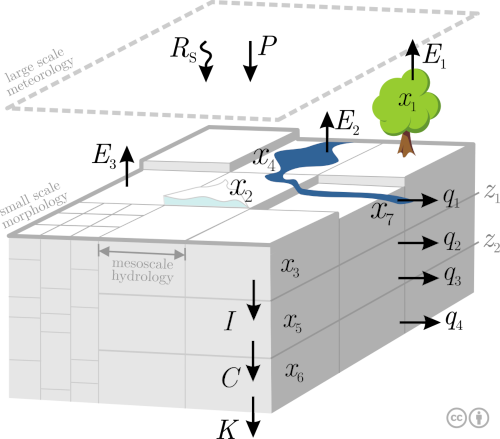
Sebastian Müller, Stephan Thober, Pallav Kumar Shrestha, Carlos Antonio Fernandez-Palomino, Afid Nur Kholis, Simon Lüdke, Matthias Kelbling, Rohini Kumar, Sabine Attinger, and Luis Samaniego
The mesoscale Hydrologic Model (mHM), first released in 2010, is today used both to advance process understanding and to provide operational services for the water sector and the wider public (e.g. the German drought monitor). mHM v5, released in 2014, established a highly modular hydrologic modeling framework. Here, we present mHM v6 – the next-generation mHM release, addressing key limitations of mHM v5 in three areas:

1. Modularity: While mHM v5 offered multiple implementations of individual processes, it was not possible to run selected components in isolation (e.g., soil-water dynamics, runoff generation, or routing). mHM v6 expands the stand-alone usage of core components, enabling workflows such as routing externally provided runoff fields (e.g., from observations, reanalyses, or other models) without requiring a full mHM hydrologic simulation. This lowers the barrier for targeted studies and supports multi-model intercomparisons.

2. Extensibility: mHM v5 provided Python bindings to access internal state variables and parameters, allowing users to manipulate these during runtime (e.g., for data assimilation, sensitivity analyses, and experimentation). mHM v6 strengthens coupling capabilities via coupling frameworks such as YAC and FINAM, complemented by Python bindings for flexible orchestration and prototyping. In addition, mHM v6 introduces a redesigned internal code structure based on object-oriented design, simplifying the addition of new process options (e.g., alternative vegetation representations) and new process components.

3. Scalability: mHM v6 introduces a revised routing framework based on a directed acyclic graph (DAG) representation of the river network with built-in OpenMP parallelization. This enables efficient simulations on increasingly large and high-resolution river networks, supporting applications from regional to continental and global scales.

Beyond these core developments, mHM v6 integrates and harmonizes several recent extensions into a unified modeling workflow. This includes floodplain simulation within the routing network, explicit representation of lakes and reservoirs, and subgrid catchment conservation (SCC) options to represent catchments smaller than the grid size while conserving points of interest (e.g., streamflow gauges and dams). On the land-surface side, mHM v6 incorporates a Richards-equation-based approach for soil infiltration, solved with an efficient numerical scheme (Ross’ fast method).

We demonstrate mHM v6 through (i) global river-network routing experiments based on the MERIT Hydro river network, quantifying the performance gains from the new parallel routing scheme, and (ii) a standalone routing setup driven by externally provided runoff to illustrate component-level workflows. We further outline how the same routing component can be embedded into coupled modeling chains via YAC/FINAM and Python-based orchestration. Overall, mHM v6 positions mHM as both a community hydrologic model and a reusable building block for modern, integrated, and scalable hydrologic workflows.

Website: https://mhm-ufz.org/

Papers describing mHM
  • Samaniego et al 2010: https://agupubs.onlinelibrary.wiley.com/doi/full/10.1029/2008WR007327
  • Kumar et al 2013: https://agupubs.onlinelibrary.wiley.com/doi/full/10.1029/2012WR012195

How to cite: Müller, S., Thober, S., Shrestha, P. K., Fernandez-Palomino, C. A., Nur Kholis, A., Lüdke, S., Kelbling, M., Kumar, R., Attinger, S., and Samaniego, L.: The mesoscale Hydrologic Model mHM v6 – the next generation: Modular, Extensible, and Scalable Hydrological Modeling, EGU General Assembly 2026, Vienna, Austria, 3–8 May 2026, EGU26-20340, https://doi.org/10.5194/egusphere-egu26-20340, 2026.

10:52–10:54
|
PICOA.2
|
EGU26-11049
|
ECS
|
On-site presentation
Julian Schlaak, Friedrich Boeing, Felix Thomas, Luis Samaniego, Martin Schrön, Falk Böttcher, and Andreas Marx

Distributed hydrological models such as the mesoscale Hydrologic Model (mHM) are commonly calibrated against discharge observations, implicitly assuming that good agreement with discharge reflects a realistic representation of internal states and fluxes. However, discharge-only calibration may lead to parameter equifinality and insufficiently constrained simulations of soil moisture, evapotranspiration, and groundwater recharge. This limits the interpretability of model results for drought analysis, water balance assessment, and management-oriented applications.

Within the MOWAX (“Monitoring- and modelling concepts as a basis for wate rbudget assessments in Saxony”) project, we assess the consistency of the simulated soil water balance of mHM using a comprehensive, multi-variable validation framework for Saxony (Germany). To better represent regional soil heterogeneity, the model setup incorporates high-resolution soil information based on the BK50 soil map. Model outputs are evaluated against independent observational data sets representing all major components of the terrestrial water balance across different spatial and temporal scales. These include observed discharge at multiple gauging stations, estimates of actual evapotranspiration derived from eddy-covariance measurements at ICOS sites and gridded Fluxcom products, long-term mean groundwater recharge from an independent BGR raster data set, and area-representative soil moisture observations from a Cosmic-Ray Neutron Sensing (CRNS) station at Cunnersdorf.

We conduct a conventional calibration of mHM using discharge observations only and select parameter sets that achieve high runoff performance. These parameter sets are subsequently evaluated with respect to their ability to reproduce independently observed soil moisture dynamics, evapotranspiration patterns, and groundwater recharge estimates. This step explicitly tests whether good discharge performance coincides with physically plausible internal model behavior. First results suggest that discharge-only calibration can be associated with a large spread in simulated soil moisture states despite similarly good runoff performance. The inclusion of soil moisture information as an additional constraint appears to reduce this spread and to improve the consistency of simulated soil water storage dynamics. However, the degree to which these constraints translate into improved agreement with independent evapotranspiration and groundwater recharge estimates is explicitly assessed and discussed.

The MOWAX project is funded by the European Regional Development Fund (EFRE) and by tax revenue on the basis of the budget approved by the Saxon state parliament (funding code 100702604).

How to cite: Schlaak, J., Boeing, F., Thomas, F., Samaniego, L., Schrön, M., Böttcher, F., and Marx, A.: Multi-variable validation and calibration of the mesoscale Hydrologic Model (mHM) using independent observations of the soil water balance, EGU General Assembly 2026, Vienna, Austria, 3–8 May 2026, EGU26-11049, https://doi.org/10.5194/egusphere-egu26-11049, 2026.

10:54–10:56
|
PICOA.3
|
EGU26-6085
|
ECS
|
On-site presentation
Fenghua You, Shanshui Yuan, Liliang Ren, Chenglong Cao, Xiuqin Fang, Shanhu Jiang, Yi Liu, and Xiaoli Yang

Effective water resource management requires a comprehensive understanding of runoff processes across spatial scales and their interconnections. However, scale effects pose major challenges to deriving a universal spatial scaling law when extrapolating runoff research from fine to broad scales. Previous studies have mainly focused on relatively small catchments (<100 km²), potentially overlooking the heterogeneity of environmental drivers affecting runoff processes. Furthermore, traditional point-based, short-term, or infrequent measurements are insufficient to accurately capture nonlinear behavior of runoff processes. To address these issues, we integrated global runoff data products with interpretable machine learning approaches to analyze runoff processes across spatially nested basins within the Yellow River Basin. Spatial scale effects and their driving factors are systematically evaluated, extending the analysis to the river-basin scale (>100 km²). Our results indicate that the runoff coefficient of most sub-basins in the Yellow River Basin exhibits multi-scaling behavior, with spatial patterns varying across scales. Rather than following a single trend, the scale effects of the runoff coefficient are complex and non-monotonic. In smaller sub-basins, the spatial distribution of precipitation primarily controls runoff scale effects, whereas in larger sub-basins, land-use patterns become the dominant governing factor.   

How to cite: You, F., Yuan, S., Ren, L., Cao, C., Fang, X., Jiang, S., Liu, Y., and Yang, X.: Unraveling Scale Effects in Naturalized Runoff Processes: Insights from Interpretable Machine Learning Across the Yellow River Basin, EGU General Assembly 2026, Vienna, Austria, 3–8 May 2026, EGU26-6085, https://doi.org/10.5194/egusphere-egu26-6085, 2026.

10:56–10:58
|
PICOA.4
|
EGU26-14872
|
ECS
|
On-site presentation
Htay Htay Aung, Biagio Sileo, Mauro Fiorentino, and Silvano F. Dal Sasso

Hydrological dynamics in Mediterranean regions are strongly controlled by temperature-driven evapotranspiration processes and marked spatial heterogeneity in soil properties and land use. In such settings, both the choice of evapotranspiration formulation and the representation of soil water storage play a decisive role in grid-based water budget modeling.

In this study, a recently developed high-resolution (1 km), monthly, grid-based water budget model (HYGRID-M) was applied to investigate the sensitivity of the simulated hydrological components to key methodological assumptions. The model was based on the temperature-driven Hargreaves equation for the estimation of reference evapotranspiration (ETo). The analysis focused on the effects of (i) soil water storage representation, comparing a uniform 1 m soil depth baseline with spatially heterogeneous soil depths; (ii) land use representation, considering both static and time-varying land use across the simulation period; and (iii) evapotranspiration parameterization, comparing the constant Hargreaves coefficient with a regionally calibrated coefficient. The analysis was conducted for the Southern Apennines District over the period 2000–2023. Land use dynamics were represented using static and time-varying configurations derived from the CORINE Land Cover database, while soil physical properties were derived from European Soil Data Centre (ESDAC) datasets and used to estimate soil hydraulic parameters through pedotransfer functions. Model outputs were evaluated by comparing simulated monthly actual evapotranspiration (AET) against independent satellite-based products (GLASS, ETMonitor, and MOD16), as well as against estimates derived from the BIGBANG model.

Results indicated that soil depth heterogeneity was the dominant factor influencing model performance. Compared to uniform soil depth assumptions, heterogeneous configurations improved agreement with reference AET datasets, reducing MAE and RMSE by ~2 and ~3 mm month⁻¹, respectively, and yielding higher KGE values. Although district-scale runoff metrics exhibited limited sensitivity, monthly runoff (Q) varies by up to ~30% in response to soil depth, particularly in winter. Land use dynamics further affected both AET and Q, with monthly Q variations reaching ~45%, whereas evapotranspiration parameterization had a comparatively minor impact, with differences of approximately 5%. Overall, these findings highlighted the critical importance of explicitly representing spatial heterogeneity in soil water storage and land use dynamics for improving large-scale water budget simulations in Mediterranean environments.

How to cite: Aung, H. H., Sileo, B., Fiorentino, M., and Dal Sasso, S. F.: A high-resolution grid-based water budget model for Mediterranean river basin districts: sensitivity to soil heterogeneity and evapotranspiration parameterization, EGU General Assembly 2026, Vienna, Austria, 3–8 May 2026, EGU26-14872, https://doi.org/10.5194/egusphere-egu26-14872, 2026.

10:58–11:00
|
PICOA.5
|
EGU26-5940
|
ECS
|
On-site presentation
Emmanuel Nyenah, Kan Lei, Martina Flörke, Robert Reinecke, and Petra Döll

Macroscale hydrological models typically operate at a coarse spatial resolution, which limits their ability to assess locally relevant impacts of climate change. Recent advances in available forcing data, computational resources, and calls for higher-resolution modelling have led to the development of models running at 5 arcmin or finer resolutions. However, evaluations of streamflow performance in several studies assessing whether higher resolution improves streamflow simulations remain inconclusive. While some studies report improved streamflow performance with increasing resolution, others find that higher spatial resolution does not necessarily translate into better model performance. To better understand these inconsistencies, we apply the 5 arcmin and 30 arcmin spatial resolutions of the latest version of the global hydrological model, WaterGAP, to investigate the impact of spatial resolution on streamflow performance in 131 near-natural European basins for the period 1950–2024. Basins are classified as small (3,000–9,000 km², 20 basins) or large (>9,000 km², 111 basins) to assess the added value of higher spatial resolution. Both model versions are run without calibration. Our results show comparable performance (KGE-based performance ratio is within ±20%) between model resolutions in 73% of large basins. The 5 arcmin version shows increased performance in 4.5% of large basins and decreased performance in 22.5% of large basins compared to 30 arcmin model resolution.   In small basins, the 5 arcmin version shows comparable performance to the 30 arcmin version in 55% of basins, performs worse in 30% of basins, and outperforms the 30 arcmin version in only 15% of cases, despite expectations that higher resolution should better capture spatial variability. Overall, median streamflow performance is lower in the 5 arcmin version compared to the 30 arcmin version, both in large (KGE5 arcmin = 0.46, KGE30 arcmin = 0.53) and small (KGE5 arcmin = 0.41, KGE30 arcmin = 0.45) basins.  This lower performance is primarily due to the overestimation of the long-term mean streamflow in both resolutions for both large and small basins, with the overestimation being slightly worse in the 5 arcmin version. It should be noted that median streamflow variability is underestimated in small river basins but is captured well in large river basins, with the 5 arcmin version showing better median streamflow variability than the 30 arcmin version. Also, correlation (timing) is improved as resolution increases. This limited ability to reproduce streamflow variability and long-term mean discharge, which has also been reported in the literature, may explain the inconsistencies in streamflow performance regarding the benefits of increased spatial resolution. These result underscores the need for targeted enhancements in model parameterization and forcing data to improve variability and bias performance .

How to cite: Nyenah, E., Lei, K., Flörke, M., Reinecke, R., and Döll, P.: The value of high model resolution for streamflow in small and large near-natural European river basins, EGU General Assembly 2026, Vienna, Austria, 3–8 May 2026, EGU26-5940, https://doi.org/10.5194/egusphere-egu26-5940, 2026.

11:00–11:02
|
PICOA.6
|
EGU26-2367
|
ECS
|
On-site presentation
Abdullah Hasan, Seyed-Mohammad Hosseini-Moghari, and Petra Döll

Human intervention directly affects the terrestrial water cycle by altering river flow regimes through water abstractions, artificial reservoirs, and water transfers. Incorporating human impacts into hydrological modeling is not straightforward. In recent decades, several global hydrological models (GHMs), including WaterGAP (Water Global Assessment and Prognosis), PCR-GLOBWB (PCRaster Global Water Balance), and H08, have incorporated representations of human interventions such as water use and reservoir operations. In addition, WaterGAP accounts for water transfers between adjacent grid cells, while H08 represents long-distance aqueduct water transfers at 55 locations worldwide, none of which are located in the Tigris–Euphrates River Basin (TERB). Despite these advances, model performance remains limited in heavily modified basins such as the TERB. This limitation is mainly due to the lack of high-quality water-use estimates and incomplete representation of alterations to the natural system, in particular, the location and the flow rates of artificial water transfers. In this study with the GHM WaterGAP, we assess the importance of explicitly representing such interventions, focusing on the upstream Euphrates River, primarily within Syria. A comparison of observed mean annual streamflow at Atatürk Dam, 823.7 m3/s for the period 1992-2011, and the Syrian-Iraqi border, 535.90 m3/s for the period 2015-2020, reveals a water loss of 287.8 m3/s between the two streamflow gauging stations. In contrast, WaterGAP simulates a smaller water loss of 82.93 m3/s with a mean annual streamflow of 638.23 m3/s at the Atatürk Dam for the period 1992-2011 and 555.3 m3/s at the Syrian-Iraqi border for the period 2015-2020. Although the upstream-downstream water loss is partially represented by WaterGAP, the remaining discrepancies between the observed and simulated streamflow losses cannot be corrected through a basin-wide uniform calibration of model parameters alone but require an adjustment of simulated water abstractions. To address this, we used the FAO (Food and Agriculture Organization) water use dataset, which suggests that water abstractions in Syria are nearly twice as high as those represented in WaterGAP; accordingly, we doubled the water abstractions in Syria. Moreover, analysis of Google Earth imagery revealed a water transfer from the Assad reservoir, located on the Euphrates River in Syria, to areas outside TERB. Based on this observation, we identified the corresponding grid cells using Google Earth imagery and implemented a demand-based water transfer from the Assad reservoir to these external areas. We assumed that whenever water demand occurred in these grid cells, it was supplied by the Assad reservoir. By doubling the water abstractions in Syria and incorporating the demand-based water transfer from the Assad reservoir to adjacent areas, WaterGAP successfully simulates a mean annual water loss of 242.33 m3/s, which is close to the observed value. These findings highlight the necessity of adjusting the simulation of human impacts in heavily modified basins as a prerequisite for a meaningful calibration of model parameters

How to cite: Hasan, A., Hosseini-Moghari, S.-M., and Döll, P.: Improving hydrological modeling in the Tigris–Euphrates River Basin through water-use adjustments and representation of water transfers, EGU General Assembly 2026, Vienna, Austria, 3–8 May 2026, EGU26-2367, https://doi.org/10.5194/egusphere-egu26-2367, 2026.

11:02–11:04
|
PICOA.7
|
EGU26-9464
|
ECS
|
On-site presentation
Paul Zarpas, Maria-Helena Ramos, Gaëlle Tallec, Denis Allard, and Fanny Sarrazin

Exploring future hydrological conditions and supporting decision-makers require datasets of irrigation water withdrawals (IWW) that capture spatial, interannual, and seasonal variabilities. Most databases do not meet these criteria, as they are typically limited to specific regions and time periods and are often available only at the annual time scale. The quantification of IWW has recently received increased attention through machine-learning approaches that can model the complex relationship between IWW and explanatory factors. However, methodological challenges remain in temporally disaggregating annual IWW data and in assessing the robustness and uncertainty of machine-learning-based estimates.

In this work, we present a comprehensive data-driven framework for estimating monthly IWW at the catchment scale. Our approach allows for the interpolation and extrapolation of IWW, for uncertainty quantification, and for the temporal disaggregation of annual IWW to a monthly resolution. Interpolation is performed using Random Forest (RF) algorithms, which are evaluated using five spatio-temporal cross-validation experiments. Prediction uncertainty distributions are modeled using Generalized Additive Models for Location Scale and Shape (GAMLSS) and observed error structures. Extrapolation of annual IWW is then achieved using a Generalized Additive Model (GAM). Finally, annual IWW data are disaggregated to monthly values using the contribution of monthly meteorological and soil wetness predictors.

The methodology is applied to 656 French catchments using the French Water Withdrawals National Database (BNPE), which makes available annual IWW values since 2008 at the local administrative level, and open-source predictors, such as area equipped for irrigation, crop type and monthly meteorological data. RF models achieve high predictive skill (r² ≈ 0.99), but performance declines sharply under spatio-temporal data removal (r² ≈ 0.4), underscoring the the importance of rigorous validation and comprehensive uncertainty quantification. A SHapley Additive exPlanations (SHAP) analysis reveals physically consistent relationships between predictors and their contribution to model predictions. Monthly disaggregated IWW are consistent with seasonal patterns simulated by four global hydrological models, with peak values occurring in summer. We demonstrate the value of the modelling framework at the catchment scale by extending the dataset backward in time and by projecting IWW into the future.

This work received funding from the European Life Revers'Eau project.

How to cite: Zarpas, P., Ramos, M.-H., Tallec, G., Allard, D., and Sarrazin, F.: A data-driven framework for estimating monthly irrigation water withdrawals at the catchment scale , EGU General Assembly 2026, Vienna, Austria, 3–8 May 2026, EGU26-9464, https://doi.org/10.5194/egusphere-egu26-9464, 2026.

11:04–11:06
|
PICOA.8
|
EGU26-13671
|
On-site presentation
Karim Douch and Gilberto Goracci

Since 2002, the Gravity Recovery and Climate Experiment (GRACE) and its successor, GRACE Follow-On (GRACE-FO), has enabled the estimation of Terrestrial Water Storage (TWS) anomalies (ΔS), significantly improving our ability to constrain water balance components at regional scales. These observations also provide new insights into large-scale drainage dynamics by allowing direct examination of the storage–discharge (S–Q) relationship, a fundamental element to conceive lumped rainfall–runoff models.

In many catchments, including those in the Amazon basin, the empirical S–Q relationship can be reasonably approximated by a deterministic function Q=ƒ(ΔS, t), where t denotes time. Substituting this function into the water balance equation yields a mass-conserving rainfall–runoff model expressed as a nonlinear first-order differential equation in ΔS . This formulation supports forward simulation of discharge and storage given precipitation and evapotranspiration (P, ET) and is amenable to assimilation of discharge observations using techniques such as Bayesian smoothing. More importantly, the model can be rearranged to perform inverse estimation — also known as “hydrology backward”— to infer net recharge (P-ET) from observed discharge Q.

In this study, we examine 50 catchments of varying size within the Amazon basin and estimate for each of them the function ƒ using two approaches: (1) by fitting a spline, which can incorporate time dependence, and (2) a Single-Hidden-Layer Feedforward Neural Network (SLFN) trained via the Extreme Learning Machine (ELM), a lightweight learning algorithm which does not require iterative backpropagation. Forward simulations (P, ET → ΔS, Q) demonstrate good skill in reconstructing hydrographs, independently of the catchment size, with some limitations in reproducing TWS anomalies during high-flow periods. For inverse modeling, we focus on reconstructing evapotranspiration (P, Q → ET) using for the precipitation a combination of various products. We show that although the estimated uncertainty on ET remains substantial, the resulting estimates are broadly consistent with existing independent ET datasets.

How to cite: Douch, K. and Goracci, G.: A data-driven framework for forward and inverse hydrology in large basins: insights from GRACE(-FO) and discharge observation, EGU General Assembly 2026, Vienna, Austria, 3–8 May 2026, EGU26-13671, https://doi.org/10.5194/egusphere-egu26-13671, 2026.

Water Balance and Variability
11:06–11:08
|
PICOA.9
|
EGU26-21824
|
On-site presentation
Benjamin D. Gutknecht and Jürgen Kusche

Individual components of the continental water cycle still show considerable variation inbetween available data products. At the same time, the research community is trying to identify processes and their changes in increasingly more detail across several domains of the hydrosphere.

Within the Collaborative Research Cluster (CRC) 1502 DETECT, we have developed the LAMBDA framework in order to assess and analyse available water flux products. Here, we evaluate essential climate variables such as precipitation (P), evaporation (E), terrestrial water storage (TWS) change (dS/dt), and river discharge (Q) by means of kernel-integrated monthly water mass fluxes in the terrestrial water budget equation over multiple time scales. We focus on the water balance equation in its form dS/dt+Q=P-E, which states that net flux P-E between atmosphere and surface must be balanced by the combination of TWS change and river discharge.

(1) In our central assessment 2003-01/2020-12 over the EURO-CORDEX region, we assessed budget flux components for 35 major river catchments, including a wide selection of observational and reanalysis products. In the master run (P: GPCC, E: GLEAMv4.2a, Q: GRDC, S: COST-G) we find that a total of 26 (74%) catchments show drying P-E behaviour, and 22 (63%) in terms of dS/dt+Q. Out of the 23 basins with a maximum P-E net flux of +25 mm/month, 91% show drying trends in P-E, and 87% show negative trends in the combination of TWS and river discharge; a finding that supports the "dry-gets-drier — wet-gets-wetter" hypothesis to some extent.  

(2) While dP/dt, across Europe, is heterogeneously distributed (-1.5±3.0 mm/month/10a), E more consistently increased by 1.2±1.4 mm/month/10a, which leads to an averaged combined P-E trend of -2.7±3.4 mm/month/10a.  On average, TWS losses increased (-0.4±1.0 mm/month/10a), and discharge declined by 0.6±2.3 mm/month/10a, i.e. combined -0.9±2.6 mm/month/10a. Which means that — in contrast to absolute fluxes — dS/dt+Q change appears, on average, ~equally caused by a decline in discharge and TWS; the trends, however, exhibit large uncertainties.

In total, a flux budget misclosure of -2.0±5.8 mm/month remains. Trend-wise and on average, these residuals become more negative (-1.8±2.7 mm/month per decade). The stated ±1σ ranges are a measure of variability across the assessed domains. 

(3) In terms of inter-component variation, we find that even at targets that are comparably well covered with P observations (e.g. Rhine), monthly precipitation values from a selection of sources vary by 10 mm (>10% of mean) on average. Multi-annual averages range from comparably ‘dry’ 70 mm/month (CRU) to as much 89 mm/month (ERA5, IMERG). At the same time, we assessed averaged evaporation to range from as low as 44 mm/month (GLEAM v4.2a) up to 58 mm/month (GLEAM v4.2b), with a mean of 51.3±7.6 mm/month (15%). Across Europe, we find that especially the observation-heavier E products drive winter-time STDs up to 50% of the monthly cross-product mean (10% during summer).

While this illustrates clearly how researchers risk achieving spurious budget closure through implicit or explicit “cherry‑picking” of terms-components, it appears that long-term trends across different data products are comparably stable for interpretation.

How to cite: Gutknecht, B. D. and Kusche, J.:  Assessment of continental water mass balance components 2003--2020 over EURO-CORDEX in the DETECT LAMBDA framework, EGU General Assembly 2026, Vienna, Austria, 3–8 May 2026, EGU26-21824, https://doi.org/10.5194/egusphere-egu26-21824, 2026.

11:08–11:10
|
PICOA.10
|
EGU26-9921
|
On-site presentation
Vadim Yapiyev, Abdikaiym Zhiyenbek, Nurlan Ongdas, Zarina Saidaliyeva, Aidos Makhanov, Sifan Koriche, and Egor Prikaziuk

Kazakhstan is a large country located in the center of Eurasia.  The quantity and quality of its water resources strongly depend on the specific cold and dry climate conditions with strong continentality, and land-locked topography. The country faces significant climatic risks and water management challenges, yet comprehensive baseline data for its regional river basins remains fragmented and largely unknown to the global community. In this study, we address these gaps by evaluating the water balance of regional river basins of Northern part of Kazakhstan—Zhaiyk-Caspian, Tobyl, Torgai, Sarysu, Nura, Yesil, and Ertis and additional inter-basins, focusing on the recent period when Earth-Observation Satellite data became available (21st century). Consequently, this research integrates ground-based hydrometeorological observations (such as river runoff and precipitation) with satellite-based products for precipitation, terrestrial evaporation and total water storage (such as MSWEP, GLEAM and GRACE), as well as global climate reanalysis datasets (ERA5), to quantify water fluxes and storage over the last 20 years. Our results show that: 1) total terrestrial water storage inferred from GRACE remained in a steady state in the study region apart from Zhaiyk-Caspian basin where it decreased by approximately by 200 mm from 2002 to 2022; 2) the water budget is dominated, in terms of inputs, by cold season (October-March) precipitation and in the loss term by warm season (April-September) evapotranspiration, with strong evaporation control; 3) the water balance closure and storage change from P-E and GRACE show good correspondence; 4) new evaporation sensor data show that best global ET remote sensing product (GLEAM) and model output (ERA5) datasets overestimate terrestrial evaporation in the study region due to water limitation. 

How to cite: Yapiyev, V., Zhiyenbek, A., Ongdas, N., Saidaliyeva, Z., Makhanov, A., Koriche, S., and Prikaziuk, E.: The water balance of the large river basins of Northern Kazakhstan estimated by remote sensing and global datasets combined with hydrologic information, EGU General Assembly 2026, Vienna, Austria, 3–8 May 2026, EGU26-9921, https://doi.org/10.5194/egusphere-egu26-9921, 2026.

11:10–11:12
|
PICOA.11
|
EGU26-11645
|
On-site presentation
Pierluigi Claps, Pietro Bogoni, Giuseppe Formetta, Giulia Evangelista, and Riccardo Rigon

The Italian Alpine region faces significant challenges in water resource management due to competing demands from agriculture, hydropower production, and flood risk mitigation. Rising temperatures and ongoing glacier retreat pose unprecedented pressures, highlighting the need for an improved understanding of hydrological cycle components. This region hosts numerous Alpine lakes that play a key role in water storage, including the four largest – Lake Maggiore, Lake Como, Lake Iseo, and Lake Garda – which together provide up to 1.2 billion m³ of storage capacity over a catchment area exceeding 12000 km².

The aim of this work is to give an overview of the modelling framework and the calibration procedures that were performed on this area using the GEOFrame-NewAge hydrological modeling system, an open-source, modular platform based on Java components, designed to represent the complex physical processes of the hydrological cycle.

The upstream lake catchments were discretized into sub-basins and modelled using a semi-distributed approach, with processes evaluated at sub-basin centroids based on spatially averaged properties. A major focus was placed on harmonizing regional meteorological datasets, as preliminary analyses revealed a systematic underestimation of precipitation at high-elevation gauges. This required a re-evaluation of input data using historical sources and atlases, particularly for the Swiss catchment of Lake Maggiore. Evapotranspiration estimates were improved by introducing a semi-distributed net radiation scheme computed on a 1500 m grid, which enhanced model performance compared to centroid-based calculations.

Model calibration was challenging due to the dense network of water infrastructures that alter natural flow regimes and bypass many gauging stations. Calibration therefore relied on selected hydrometric stations and time periods minimally affected by anthropogenic influences, enabling a consistent basin-wide calibration. Using the Kling-Gupta Efficiency as the objective function, the model achieved excellent performance, with calibration and validation values often exceeding 0.8. Post-processing analyses also showed good agreement with long-term averages of key hydrological components.

By enabling the estimation of impacts on long-term water availability, this successfully calibrated model provides a powerful tool to quantify water scarcity, optimize reservoir management, and minimize conflicts among stakeholders, especially under a changing climate.

How to cite: Claps, P., Bogoni, P., Formetta, G., Evangelista, G., and Rigon, R.: Estimating the components of the hydrological budget of the Alpine lakes using the GEOFrame modeling system, EGU General Assembly 2026, Vienna, Austria, 3–8 May 2026, EGU26-11645, https://doi.org/10.5194/egusphere-egu26-11645, 2026.

11:12–11:14
|
PICOA.12
|
EGU26-2924
|
ECS
|
On-site presentation
Chong Zhang, Haonan Shen, and Yun Pan

The Haihe River basin (HRB) is the homeland for 120 million people with the 10% of total production of grains in China. HRB has experienced serious water storage depletion due to ongoing socio-economic development, population growth, and additional water stress from climate change, thus resulting in a series of eco-environmental problems, such as land subsidence, seawater invasion, and river blanking. To tackle these issues, multiple water transfer projects have been built to supply water to the HRB from other river basins. One of the most famous is the Middle Route of the South-to-North Water Transfers (SNWT) Project, which began its operation in late 2014. Up till now, the SNWT-diverted water has been used for compensating environmental flow, replenishing reservoirs recharging aquifers, and replacing urban groundwater pumping. This raises the widely concerned issue of whether the terrestrial water storage (TWS) and water budget in HRB have changed unexpectedly after the implementation of SNWT.

This study assesses monthly changes of TWS and water budget in the HRB from 2003 to 2023 by using Gravity Recovery and Climate Experiment (GRACE) satellite and ancillary datasets. We quantify the extent and contribution ratio of each water budget factor to TWS change before and after the SNWT operation using hierarchical analysis. Results show that the annual rate of TWS in HRB shifted from -17.0 mm/a (during 2003-2014) to +4.8 mm/a (during 2015-2023), which can be mainly attributed to the combined impacts of the intense precipitation infiltration in 2021 and the additional water recharge from the SNWT. Precipitation is identified as the main factor dominating regional TWS change, followed by evapotranspiration, runoff, and the water transfer volume. The averaged contribution ratios of these four factors are calculated as 57.0%, 34.0%, 7.49%, and 1.6%, respectively. Most importantly, we found that the contribution ratios of runoff and water transfer volume increased while those of precipitation and evapotranspiration decreased after the SNW'T operation, indicating a new change of HRB's water budget after water transfer.

Although the annual trend of TWS in HRB is increasing over the timespan of SNWT operation (2015-2023), the annual trend of TWS is still decreasing when focusing only on the timespan of 2022-2023. Such decrease in TWS can either be interpreted as a normal recessionary of TWS following the over-recharge from intense precipitation in 2021, or it can be recognized as representing the ongoing TWS depletion in spite of the implementation of SNWT. If viewed from the perspective of regional water budget, the inflow of water from the SNWT operation will certainly moderate the depleting trend of TWS in HRB. Yet whether the SNWT-diverted water can completely halt the TWS depletion or even cause the TWS recovery, still require further analysis and assessment based on the longer-term observational data of TWS change in HRB. The findings of this study highlight the notable impacts of large-scale water transfer and intense precipitation on the water cycle of HRB, and such impacts may become more obvious with the continued operation of SNWT in the future.

How to cite: Zhang, C., Shen, H., and Pan, Y.: Assessing the Impact of Interbasin Water Transfer on Terrestrial Water Budget: A GRACE-Based Case Study in China’s Haihe River Basin, EGU General Assembly 2026, Vienna, Austria, 3–8 May 2026, EGU26-2924, https://doi.org/10.5194/egusphere-egu26-2924, 2026.

11:14–11:16
|
PICOA.13
|
EGU26-5205
|
ECS
|
On-site presentation
Shih-En Chen and Tsung-Yu Lee

Climate change induced precipitation pattern changes along with the increasing forest area have affected the hydrological processes in Taiwan’s mountainous watersheds. Recent studies pointed out that despite the increasing rainfall, the ratio of precipitation that turns into runoff decreases, implying more water storage in watersheds. However, a contradictory decreasing trend in groundwater level was also discovered, highlighting the importance of water budget reassessment. To figure out where the missing water is stored, observed precipitation, runoff data and model evapotranspiration data from Taiwan Climate Change Projection Information and Adaption Knowledge Platform (TCCIP) will be integrated to infer total dynamic storage by water balance equation. To further distinguish the composition of total dynamic storage, recession analysis and sensitivity function will be applied to derive direct storage and indirect storage, which represent the storage that drives streamflow and the remainder of it, respectively. Finally, the combination of total water storage data (from GRACE or GNSS), soil water content data (such as TerraClimate), observed groundwater levels or other potentially relevant data will be used to validate the results. The objectives of this study include: (1) Accessing the water budget under climate and land use changes in Taiwan’s mountainous watersheds and (2) Identifying the distribution of the water stores in the watersheds.

How to cite: Chen, S.-E. and Lee, T.-Y.: Water balance under climate and land use changes in Taiwan’s mountainous watersheds, EGU General Assembly 2026, Vienna, Austria, 3–8 May 2026, EGU26-5205, https://doi.org/10.5194/egusphere-egu26-5205, 2026.

11:16–11:18
|
PICOA.14
|
EGU26-15931
|
On-site presentation
Jaime J. Carrera-Hernandez

This work shows how the recently developed Mexico's High Resolution Climate Database (MexHiResClimDB) has been extended to include Reference Evapotranspiration obtained with the Hargreaves method. With this extended database and using as reference the 1961-1990 period, it has been found that aridity has increased in Mexico, which affects surface water storage and potential groundwater recharge. The impact of this increased aridity on water resources is shown for the Cutzamala System, which is comprised of seven reservoirs that provide 14 m3/s, representing nearly 30% of the water supplied to Mexico City and its Metropolitan Area. This work also shows that nation-wide studies on climate variability have to focus at the watershed level in order to quantify its impact on water resources.

How to cite: Carrera-Hernandez, J. J.: Nation-wide climate variability in Mexico and its effect on water resources, EGU General Assembly 2026, Vienna, Austria, 3–8 May 2026, EGU26-15931, https://doi.org/10.5194/egusphere-egu26-15931, 2026.

11:18–11:20
|
EGU26-13401
|
ECS
|
Virtual presentation
Muhammed Sabir, Nargiz Naushad, Sooryasree Suresh, Vishnu Sreekumar, and Gowri Reghunath

Hydrological variability in river basins arises from complex, non-linear interactions between climatic forcing and catchment characteristics that are often inadequately captured by conventional statistical measures. In hydro-climatically diverse regions such as Peninsular India, there is a need for scale-consistent and assumption-free approaches to quantify both variability and process interdependence. This study applies an information-theoretic framework to characterise hydrological variability and process connectivity across river basins in Peninsular India. Long-term hydrological data, including daily precipitation and streamflow data for a large number of catchments, were obtained from the CAMELS-IND dataset. Analyses were conducted at daily, monthly, and annual time scales to investigate scale-dependent behaviour. Prior to the information-theoretic analysis, trends of various hydrological processes were assessed using non-parametric methods, including the Mann–Kendall test, to identify potential temporal changes in hydrological regimes. Shannon entropy and mutual information measures were used to quantify the variability and uncertainty of various hydrological processes and process relationships across spatial and temporal scales. Trend analysis indicates spatially heterogeneous precipitation and streamflow behaviour across river basins of Peninsular India, with stations exhibiting increasing, decreasing, and non-significant trends. Precipitation entropy is generally higher than streamflow entropy across catchments, suggesting differences in variability between climatic inputs and runoff responses. Mutual information analysis further reveals scale-dependent variations in rainfall–runoff dependence across catchments. The results highlight the potential of information-theoretic metrics for characterising hydrological variability and rainfall–runoff relationships in data-scarce and hydro-climatically heterogeneous regions.

How to cite: Sabir, M., Naushad, N., Suresh, S., Sreekumar, V., and Reghunath, G.: Entropy-Based Quantification of Hydrological Variability in Peninsular Indian River Basins, EGU General Assembly 2026, Vienna, Austria, 3–8 May 2026, EGU26-13401, https://doi.org/10.5194/egusphere-egu26-13401, 2026.

11:20–12:30
Lunch break
Chairpersons: Franziska Clerc-Schwarzenbach, Ehsan Modiri
Water Storages
16:15–16:17
|
PICOA.1
|
EGU26-15896
|
On-site presentation
Andy Wood and Ethan Ritchie

This presentation details the development of an experimental protocol for benchmarking multiple existing snow water equivalent (SWE) datasets. Given the lack of standardized SWE product and model intercomparison, a systematic community evaluation protocol is needed to provide coherent comparisons of existing products. Utilizing SWE estimates from lidar-based ASO (Airborne Snow Observatory) as ‘ground-truth’ (uncertainties notwithstanding), we evaluate the performance of more than a dozen publicly available SWE estimation approaches in the US (including SNODAS, UA SWE, US National Water Model, UCLA SWE, SWEML, NLDAS2 (VIC, Noah, and Mosaic), ERA5-Land, CU SWE, and CONUS404). Over 400 scenes of spatially continuous ASO SWE at the catchment scale are used for benchmarking the aforementioned SWE estimation methods and establishing a protocol for evaluating future products. The approach involved processing SWE products into catchment spatial resolutions, based on a common hydrofabric, to enable standardized cross-product evaluation. Multiple performance metrics are evaluated to quantify performance related to the ASO observations, including the dependence of SWE performance against elevation, aspect and land cover factors. We also assess whether, given their differences in accuracy, different products lead to different predictability for seasonal, basin-scale runoff. The catchment SWE protocol contributes to the NOAA CIROH (Cooperative Institute for Research to Operations in Hydrology) Hydrologic Prediction Testbed. As the collection of standardized results from multiple products and development groups grows, it will enable the tracking the performance and advancement of SWE estimation products, enabling evidence-based review and adoption of new SWE estimation techniques into applications, including operational prediction.

How to cite: Wood, A. and Ritchie, E.: A testbed approach for benchmarking multiple gridded snow datasets and their relative value for seasonal runoff prediction, EGU General Assembly 2026, Vienna, Austria, 3–8 May 2026, EGU26-15896, https://doi.org/10.5194/egusphere-egu26-15896, 2026.

16:17–16:19
|
PICOA.2
|
EGU26-19895
|
ECS
|
On-site presentation
Colin Moldenhauer, Wolfgang Preimesberger, Johanna Lems, Dávid D.Kovács, Alexander Gruber, Maud Formanek, Richard de Jeu, Diane Duchemin, Nemesio J. Rodríguez-Fernández, Bethan L. Harris, and Wouter Dorigo

Soil moisture plays a pivotal role in the Earth system, exerting a profound impact on a wide range of environmental and climatic processes. Consequently, accurate monitoring of soil moisture is essential for climate research, environmental management, and the development of adaptation strategies under changing climate conditions. For these purposes, datasets developed within the ESA CCI Soil Moisture (SM) project provide homogenized long-term records of surface soil moisture. The newest suite of products, ESA CCI SM v9.2, consists of daily, global soil moisture estimates derived from a large set of historic and operational microwave sensors. Its data spans a period of over 45 years, produced both from passive and active observation systems. To address advancing user requirements, a set of science products complements the original SM Climate Data Records: A) gap-free surface soil moisture, filling data gaps due to missing satellite overpasses by means of a statistical method, B) satellite-only sensor harmonization, providing a record independent of land surface model data. In addition, v9 introduces three novel datasets: C) estimates of root-zone soil moisture, necessary to assess processes beyond the soil surface layer, D) increased spatial resolution of 0.1°, enabling research on mesoscale land-atmosphere interactions and E) soil freeze/thaw state, an important parameter for the interpretation and flagging of soil moisture retrievals.

How to cite: Moldenhauer, C., Preimesberger, W., Lems, J., D.Kovács, D., Gruber, A., Formanek, M., de Jeu, R., Duchemin, D., Rodríguez-Fernández, N. J., Harris, B. L., and Dorigo, W.: ESA CCI SM v9: advancements in global satellite soil moisture records, EGU General Assembly 2026, Vienna, Austria, 3–8 May 2026, EGU26-19895, https://doi.org/10.5194/egusphere-egu26-19895, 2026.

16:19–16:21
|
PICOA.3
|
EGU26-10024
|
On-site presentation
Tajdarul Hassan Syed and Hrishikesh Kumar

Groundwater is a critical resource that sustains life and livelihood on Earth. Changing climatic patterns and increased groundwater withdrawal to meet the demands of irrigation and municipal water supply have stressed the world’s major aquifer systems. Although groundwater is the largest available freshwater resource, it is often poorly monitored and hence poorly managed, particularly in data-scarce regions. Satellite-based Interferometric Synthetic Aperture Radar (InSAR) has emerged as a powerful tool for monitoring aquifer systems worldwide. In this study, we utilize nearly two decades (2007-2024) of InSAR measurements to investigate the temporal evolution of land subsidence in the Delhi National Capital Region of India. The observations revealed two major subsidence zones, located in the Dwarka (12 km²) and Gurgaon (1 km²) areas, with subsidence rates of up to 6.0 cm/year, which were observed between 2007 and 2010 in response to increased groundwater extraction. Post-2016, the subsidence zone near Dwarka began to show uplift (~2 cm/year) in response to rising groundwater levels. The areas north of Gurgaon, which had subsided by nearly 1m during 2014-18 at a rate of almost 15 cm/year, started to show a marked reduction in subsidence rate (from 15 cm/year to 7 cm/year) after 2019. Although these subsidence zones, located within the Administrative Boundary of Delhi (ABD), showed uplift/significant reduction in subsidence rate, Faridabad, a town outside the ABD, continued to subside till 2023. The rebound of the aquifer system and a substantial reduction in the subsidence rate are attributed to extensive groundwater management practices mandated within the ABD. The recovery of the stressed aquifer system, nearly 1.5 m after 2018, despite decreasing rainfall, further highlights the role of human intervention. 

How to cite: Syed, T. H. and Kumar, H.: Space-Time Evolution of Land Subsidence in India: Evidence for Recovery of Stressed Aquifer Systems, EGU General Assembly 2026, Vienna, Austria, 3–8 May 2026, EGU26-10024, https://doi.org/10.5194/egusphere-egu26-10024, 2026.

16:21–16:23
|
PICOA.4
|
EGU26-2524
|
On-site presentation
Seyed-Mohammad Hosseini-Moghari and Petra Döll

Terrestrial water storage anomalies (TWSA) derived from the Gravity Recovery and Climate Experiment (GRACE) and its successor, GRACE Follow-On (GRACE-FO), provide essential information for assessing regional and global water storage changes. Several processing centers produce GRACE(-FO) TWSA products intended for use by non-geodesy experts, particularly for validating and calibrating large-scale hydrological models. However, discrepancies among these TWSA products remain poorly understood within the hydrology community. In this study, we quantify differences among six GRACE(-FO) TWSA products—three leakage-corrected spherical harmonic solutions (HydroSat, COST-G, and GFZ-GravIS) and three mascon solutions (CSR-M, GSFC-M, and JPL-M)—for the period April 2002 to December 2024 across 15 large river basins (>210,000 km²). We compare linear trends and seasonal amplitudes and apply the Generalized Three-Cornered Hat (GTCH) method to identify which products deviate most and least from the others. Our results show substantial variability in both trends and seasonal amplitudes across products and basins. For example, in the Uruguay Basin, the trend estimated by HydroSat is 1.77 mm/yr, whereas GFZ-GravIS reports -5.08 mm/yr. In the Churchill Basin, the seasonal amplitudes of the detrended time series range from 84 mm (GFZ-GravIS) to 45 mm (JPL-M), with a median of 57 mm. In another case, the mean range of TWSA across products in the Bravo Basin is 1.7 times larger than the median seasonal amplitude across the same products. According to the GTCH results, GFZ-GravIS shows the largest disagreements with the other products across all 15 basins, whereas GSFC-M and COST-G achieve the highest agreement in 7 and 5 basins, respectively. These results demonstrate that reliance on a single GRACE(-FO) product can mislead hydrological model evaluation. We therefore recommend using ensemble-based approaches and explicitly accounting for GRACE TWSA uncertainty when employing these products as reference data.

How to cite: Hosseini-Moghari, S.-M. and Döll, P.: Assessment of inter-product uncertainty in GRACE/GRACE-FO-derived terrestrial water storage, EGU General Assembly 2026, Vienna, Austria, 3–8 May 2026, EGU26-2524, https://doi.org/10.5194/egusphere-egu26-2524, 2026.

Evapotranspiration and Land-Atmosphere Fluxes
16:23–16:25
|
PICOA.5
|
EGU26-5046
|
ECS
|
On-site presentation
Muhammad Usman Liaqat, Stefania Camici, Francesco Leopardi, and Luca Brocca

The Gravity Recovery and Climate Experiment (GRACE) and its Follow-On mission (GRACE-FO) provide valuable observations of terrestrial water storage (TWS) dynamics from regional to global scales. However, their limited spatio-temporal resolution impedes the reliable separation of individual hydrological fluxes, especially precipitation. To overcome these challenges, a joint collaboration between NASA and ESA initiated the Mass change and Geosciences International Constellation (MAGIC), aiming to deploy next-generation gravity missions with enhanced spatio-temporal resolution to better monitor hydrological extremes such as droughts and floods. The primary objective of this work is to examine the impact of improving the spatio-temporal resolution of NGGM and MAGIC on precipitation estimation by developing multiple synthetic experiments globally. Precipitation used as forcing in an Earth System Model (ESM) is compared against reference precipitation, with ERA5-Land precipitation serving as the benchmark, to evaluate the reliability of the SM2RAIN approach (Brocca et al., 2014) when driven by equivalent water height (EWH) data (in the past it was implemented by using surface soil moisture data). The global correlation analysis shows median and mean correlation coefficients of 0.74 and 0.69, respectively, indicating satisfactory performance of the EWH-based SM2RAIN framework across most terrestrial regions. Stronger correlations are observed over Northern Hemisphere mid-latitudes, including Europe, northern Asia, and North America, reflecting robust performance in temperate climates, while reduced performance is evident in several tropical regions such as central Africa, parts of the Amazon Basin, and Southeast Asia. Subsequently, synthetic experiments were developed using filter and unfiltered configurations of GRACE-C, NGGM, and MAGIC missions. The performance of NGGM and MAGIC filtered configurations indicates their capability to capture precipitation dynamics effectively as compared to unfiltered ones. The results of the study clearly highlight the benefit of NGGM and MAGIC missions in improving our capability to estimate various hydrological components, particularly for precipitation estimation relying on satellite data as inputs.

How to cite: Liaqat, M. U., Camici, S., Leopardi, F., and Brocca, L.: Advancing Global Precipitation Estimation Using Next-Generation Gravity Missions, EGU General Assembly 2026, Vienna, Austria, 3–8 May 2026, EGU26-5046, https://doi.org/10.5194/egusphere-egu26-5046, 2026.

16:25–16:27
|
PICOA.6
|
EGU26-11978
|
ECS
|
On-site presentation
Kwint Delbare, Oscar M. Baez-Villanueva, and Diego G. Miralles and the ESA-CCI Consortium

Land evaporation is an essential component of the terrestrial water, energy, and carbon cycles, yet its large-scale behaviour remains poorly understood. This limited understanding relates to the scarcity and uneven distribution of ground-based measurements (particularly across the Global South), the difficulties in modelling the complex interplay of vegetation processes, atmospheric turbulence, and soil–vegetation–atmosphere dynamics, and the inability to observe evaporation directly from space. This uncertainty limits our ability to quantify land–atmosphere feedbacks, monitor hydrological extremes such as droughts and heatwaves, understand the influence of climate change on water availability, and enhance the resilience of agricultural systems, emphasising the need for accurate, long-term, and observation-based global records.

Given the relevance of land evaporation for climate, it has recently been identified by the Global Climate Observing System (GCOS) and the European Space Agency (ESA) as an Essential Climate Variable (ECV). ESA through its Climate Change Initiative (CCI) has recently launched the CCI Land Evaporation initiative, which aims to provide an observationally constrained dataset for climatological research that is aligned with GCOS requirements and climate community needs.

To achieve this goal, the ESA CCI Land Evaporation initiative will integrate satellite observations with state-of-the-art process-based and machine learning modelling. Long-term (1980-present), spatially consistent daily estimates of land evaporation and its associated ECV products—transpiration, interception loss, bare soil evaporation, as well as latent and sensible heat—will be generated using a novel algorithm following a multi-physics strategy.  Processes will be constrained by satellite data and represented by multiple alternative formulations derived from an extensive literature review. Multi-physics permutations will be evaluated through perturbation experiments, and estimates will be compared against eddy-covariance observations to identify the algorithmic configuration that achieves the highest performance while maximising simplicity and reliance on satellite data. The modular design will also enable the quantification of epistemic uncertainty, which will be provided for each one of the variables comprising the Land Evaporation CCI dataset.

Overall, this presentation will summarise the objectives, methodological framework, algorithm development, and anticipated contributions of the ESA CCI Land Evaporation initiative to climate monitoring and long-term assessment of the terrestrial water cycle.

How to cite: Delbare, K., Baez-Villanueva, O. M., and Miralles, D. G. and the ESA-CCI Consortium: ESA CCI Land Evaporation: Towards a long-term consistent satellite-based global evaporation dataset, EGU General Assembly 2026, Vienna, Austria, 3–8 May 2026, EGU26-11978, https://doi.org/10.5194/egusphere-egu26-11978, 2026.

16:27–16:29
|
PICOA.7
|
EGU26-15126
|
ECS
|
On-site presentation
Jacob Nelson

Plants are key regulators of global terrestrial water cycles, acting as the conduit for transporting soil moisture to the atmosphere via transpiration. Plants are also already being impacted by the changing environment, as demonstrated by the large forest mortality of central and southern Europe in the last decade. In addition to these negative effects, increasing CO2 concentrations are expected to make plants more efficient at taking up carbon per unit of water loss, a phenomenon currently accounted for in most earth system models. The complex potential positive and negative effects of a changing climate on plants, as well as the potential reverberations across the broader water cycle, is a key unknown when making climate projections into the future.

Despite how central plants are to the global terrestrial water cycle, current model estimates of global transpiration to evapotranspriation (T/ET) in the CMIP 6 (Coupled Model Intercomparison Project) models disagree, ranging from 20-60% for the historical period. The broad uncertainty in estimated global transpiration represents a major source of uncertainty, both in our current understanding of the control of plants on water cycles, as well as in how global water cycle feedbacks might play out in the next 100 years.

New data driven estimates of transpiration from FLUXCOM-X, which models ecosystem fluxes using remote sensing, in situ eddy covariance measurements and machine learning, representing a new opportunity for an independent diagnostic to evaluate global transpiration estimates, such as those from the CMIP 6 models. A key advantage to the new FLUXCOM-X transpiration estimates is full spatiotemporal coverage as 0.05° spatial and hourly temporal resolution over more than 20 years, allowing diagnostics to account for spatial regions and temporal periods with highest disagreement, such as green up, peak growing season, and during precipitation events. Going forward, utilizing the data driven products of transpiration and evapotranspiration as a new diagnostic of model functioning will help guide model development and lower climate projections into the future.

How to cite: Nelson, J.: Reconciling Global Transpiration Estimates of Process and Data Driven Models , EGU General Assembly 2026, Vienna, Austria, 3–8 May 2026, EGU26-15126, https://doi.org/10.5194/egusphere-egu26-15126, 2026.

16:29–16:31
|
PICOA.8
|
EGU26-189
|
ECS
|
On-site presentation
Ghazar Muzaffar and Tushar Apurv

Estimating evapotranspiration (ET) in areas with limited data remains a challenge, yet it is crucial for water and agricultural management. The Surface Flux Equilibrium (SFE) method is a promising approach, as it estimates the evaporative fraction (EF) using only temperature and humidity observations, assuming that the surface and air reach a steady balance when drying from sensible heat and moistening from ET become similar. In this study, we explore the conditions in which the assumptions of the SFE theory do not hold and identify the variables that can help correct the resulting biases using the ERA5 reanalysis dataset over the Indian landmass. We find that in water-limited regions, the temperature difference between the land and atmosphere can be used to correct biases in SFE-based EF estimates when there are longer intervals between two rainfall events, while relative humidity can be used to correct biases in areas with more frequent rain. In energy-limited regions, net radiation controls the surface flux imbalance and can therefore be used for bias correction. Incorporating these region-specific variables into machine learning models significantly improves SFE’s EF estimates. Our results highlight the value of identifying and using physical indicators to enhance the accuracy of SFE under non-equilibrium conditions.

How to cite: Muzaffar, G. and Apurv, T.: Understanding and Correcting Non-Equilibrium Biases in Surface Flux Equilibrium-Based Evaporative Fraction Estimation., EGU General Assembly 2026, Vienna, Austria, 3–8 May 2026, EGU26-189, https://doi.org/10.5194/egusphere-egu26-189, 2026.

16:31–16:33
|
PICOA.9
|
EGU26-1103
|
ECS
|
On-site presentation
Giovanni Selleri, Mattia Neri, and Elena Toth

Potential Evapotranspiration (PET) is a relevant input for hydrological modelling and assessing water balance components. PET estimation usually requires meteorological inputs to simulate key radiative and aerodynamic processes.

The reference Penman-Monteith method estimates PET as a function of net solar radiation, pressure, humidity, wind speed, maximum and minimum air temperature. Except for temperature, reliable observations of the other variables are rarely available in most regions of the world; consequently, simpler empirical formulas have been developed to reproduce PET using only a subset of variables. Net solar radiation is probably the most critical input because it plays a major role in evaporative processes, but is very challenging to measure and is often unavailable. This study focuses on three widely used empirical expressions that, in addition to temperature, apply different approaches to approximate the solar radiation at the surface:

  • Oudin formula1 uses, in addition to temperature, the extra-terrestrial radiation value, which depends only on latitude and day of the year.
  • Hargreaves formula2 improves the estimation of surface solar radiation using diurnal temperature variation to compute a sky clearness factor, simulating the fraction of extraterrestrial solar radiation absorbed by the atmosphere.
  • a modified version of Hargreaves formula3 also includes precipitation in the sky clearness computation.

Here we test the robustness of these three formulas in estimating daily PET across diverse global regions. Our purpose is to assess whether increasing the formula complexity, estimating surface solar radiation including temperature variation and then also precipitation, can improve daily PET estimation.

Leveraging worldwide meteorological data of thousands of basins from the large-sample hydrological dataset Caravan4, we initially compared the daily PET estimates produced by the above cited formulas with the reference values based on the Penman-Monteith method. Significant differences were observed among climatic regions: the Hargreaves formula generally performed best, but all methods exhibit biases in particular contexts.

Secondly, we conducted a series of calibration experiments, modifying the original parameterization of the formulas by optimizing their fit to the reference Penman-Monteith in the study basins. We optimized the empirical coefficients for all the basins, both globally and within homogeneous hydro-climatic regions, and analyzed the spatial pattern of performance. Then, we divided the basins into training and validation sets using a distance-based criterion within each region. We performed new calibrations to assess whether the fitted formulas remained valid across different catchments.


References:

1Oudin, L. et al. (2005). Which potential evapotranspiration input for a lumped rainfall–runoff model? Journal of Hydrology, 303(1–4), 290–306. https://doi.org/10.1016/j.jhydrol.2004.08.026

2Hargreaves, G.H. & Samani Z.A. (1985). Reference Crop Evapotranspiration from Temperature. Applied Engineering in Agriculture, 1(2), 96–99. https://doi.org/10.13031/2013.26773

3Droogers, P., & Allen, R. G. (2002). Estimating reference evapotranspiration under inaccurate data conditions. Irrigation and Drainage Systems, 16(1), 33–45. https://doi.org/10.1023/A:1015508322413

4Kratzert, F. et al. (2023). Caravan—A global community dataset for large-sample hydrology. Scientific Data, 10(1), 61. https://doi.org/10.1038/s41597-023-01975-w

How to cite: Selleri, G., Neri, M., and Toth, E.: Global-scale calibration of three empirical PET formulas: evaluation of simple meteorological variables as proxies for solar radiation, EGU General Assembly 2026, Vienna, Austria, 3–8 May 2026, EGU26-1103, https://doi.org/10.5194/egusphere-egu26-1103, 2026.

16:33–16:35
|
PICOA.10
|
EGU26-4324
|
ECS
|
On-site presentation
Wenyang Cao, Pei Wang, Renjie Guo, Zifan Zhang, Zhihui Zhao, Jiayin Liu, Yuan Yuan, and Yiran Liu

Abstract: The semi-humid and semi-arid region of Northern China is a typical climatic transition zone characterized by water scarcity and ecological fragility. As water resources constitute the critical constraint on sustainable development in this region, investigating evapotranspiration (ET)—the primary pathway of water loss—is imperative. This study employed a Soil-Plant-Atmosphere Continuum (SPAC) model to characterize hydro-thermal transfer processes within the vegetation-soil system from 2001 to 2020, quantifying both total ET and its components. Model validation demonstrated robust performance against in-situ observations, with coefficients of determination (R2) for latent heat flux, net radiation, and land surface temperature ranging from 0.48 to 0.95 across four representative sites. Spatially, ET decreased from southeast to northwest, with a multi-year regional average of 439.53 ± 32.80 mm. ET exhibited distinct seasonal variability, peaking in summer (235.61 ± 24.15 mm) followed by spring (111.13 ± 13.02 mm), autumn (74.13 ± 9.07 mm), and winter (18.38 ± 3.46 mm). Partitioning analysis revealed that the multi-year average vegetation transpiration (T) and soil evaporation (Es) were 244.53 ± 30.16 mm and 195.00 ± 15.52 mm, respectively, yielding a mean transpiration fraction (T/ET) of 0.54 ± 0.04. The spatial pattern of T/ET was demarcated by the Greater Khingan – Taihang Mountains, showing higher values in the east, lower values in the west, and peak values along the boundary line and its vicinity. Seasonal divergence was pronounced: transpiration dominated in summer (T/ET reaching 0.64 ± 0.05), whereas soil evaporation prevailed in other seasons, reducing T/ET to 0.17 ± 0.04 in winter. ET and its components showed significant sensitivity to environmental changes. Spearman analysis indicated strong correlations (r > 0.8) with downward shortwave radiation (Rs), vapor pressure deficit (VPD), and leaf area index (LAI). Random Forest and SHAP analyses further revealed different key factors influencing the processes: Rs, VPD, and LAI were the primary drivers for total ET; soil evaporation was mainly influenced by Rs, relative humidity, and VPD; and transpiration was mainly driven by LAI and Rs, with importance values of 0.35 and 0.17, respectively. Notably, LAI was crucial in controlling the T/ET ratio, with an importance value of 0.46. These findings offer vital scientific insights for ecosystem conservation and water resource management in the semi-humid and semi-arid regions of Northern China.

Keywords: Evapotranspiration; Numerical simulation; SPAC model; T/ET ratio; Climate change; Leaf Area Index; Semi-humid and semi-arid regions of Northern China.

How to cite: Cao, W., Wang, P., Guo, R., Zhang, Z., Zhao, Z., Liu, J., Yuan, Y., and Liu, Y.: Simulation of Evapotranspiration and Its Response to Environmental Changes in the Semi-Humid and Semi-Arid Regions of Northern China, EGU General Assembly 2026, Vienna, Austria, 3–8 May 2026, EGU26-4324, https://doi.org/10.5194/egusphere-egu26-4324, 2026.

16:35–18:00
Login failed. Please check your login data.