ERE3.9 | Energy gas geo-storage across scales: from theory to practice
Energy gas geo-storage across scales: from theory to practice
Convener: Kaiqiang ZhangECSECS | Co-conveners: Ziqing PanECSECS, Songyan Li, David MischECSECS, Xiangyun ShiECSECS
Orals
| Thu, 07 May, 14:00–15:45 (CEST)
 
Room 0.51
Posters on site
| Attendance Thu, 07 May, 08:30–10:15 (CEST) | Display Thu, 07 May, 08:30–12:30
 
Hall X4
Orals |
Thu, 14:00
Thu, 08:30
Energy gas geo-storage is crucial for achieving a sustainable future, as it helps to reduce CO2 emissions and facilitates the provision of large-scale renewable energy. However, a persistent gap exists between small-scale theoretical advances and large-scale practical implementation. This session brings together research on geological storage of CO2, hydrogen, natural gas and other fluids across molecular, pore, reservoir and field scales. Contributions will address fundamental mechanisms, innovative experimental and modelling approaches. Particular emphasis will be placed on technologies and strategies to translate laboratory findings to field-scale implementations. By integrating insights across scales, this session aims to explore pathways for advancing geo-storage toward gigaton-scale deployment, thereby supporting energy security and global climate goals.

Orals: Thu, 7 May, 14:00–15:45 | Room 0.51

The oral presentations are given in a hybrid format supported by a Zoom meeting featuring on-site and virtual presentations. The button to access the Zoom meeting appears just before the time block starts.
Chairpersons: Kaiqiang Zhang, David Misch
14:00–14:05
14:05–14:15
|
EGU26-2112
|
ECS
|
On-site presentation
Xiaolong Sun, Chenguang Deng, and Keyu Liu

Good reservoir injectivity is a fundamental requirement for high-quality CO2 geological storage sites. Salt precipitation near injection wells, induced by brine evaporation and crystallization, is one of the key factors impairing reservoir injectivity. To clarify the differences in salt precipitation and consequent reservoir damage across distinct reservoir types, this study selected sandstone samples with varying micro pore structures and macro reservoir structures, and conducted salt precipitation simulation experiments based on a high-temperature and high-pressure core-flooding system. Employing thin-section analysis, scanning electron microscopy (SEM) with energy-dispersive spectroscopy (EDS), micro-area X-ray fluorescence (μ-XRF) spectroscopy, high-pressure mercury intrusion (HPMI), nuclear magnetic resonance (NMR), and micro-computed tomography (micro-CT) scanning, the salt crystal characteristics, distribution patterns, as well as variations in sandstone pore structures were systematically investigated. High-porosity and high-permeability reservoirs with favorable pore structures are characterized by a small number of salt precipitates, small-sized salt crystals, and dispersed single crystals. With the deterioration of the pore-throat size, sorting and connectivity, the quantity and size of salt crystals and their aggregates increase. With the change of the reservoir pore structures from the homogeneous large pore-throat type to the heterogeneous small pore-throat type, the distribution patterns of salt precipitation vary from weak homogeneous salt precipitation dominated by in-situ brine evaporation, to intensive local salt precipitation dominated by brine capillary backflow, and to intensive homogeneous salt precipitation controlled by brine capillary backflow and salt solute diffusion. Compared with macroscopically homogeneous massive sandstones, heterogeneous sandstones with low- and high-permeability zones generate a greater amount of salt precipitation both in low- and high-permeability segments. This is because the low-permeability zone lack effective brine displacement by injected CO2, thereby retaining more residual brine for salt precipitation. Meanwhile, the salt crystal characteristics and contents indicate the existence of capillary backflow of brine from low-permeability zone to high-permeability zone. Reservoirs with different initial micro- and macro-structures have different characteristics of salt precipitation and thus varied risks of injectivity impairment. Heterogeneous reservoirs, both at the microscale and macroscale, carry a higher risk of salting-out induced reservoir damage, thus requiring the formulation of appropriate salting-out mitigation methods for these reservoirs.

How to cite: Sun, X., Deng, C., and Liu, K.: Effects of micro pore structures and macro reservoir structures on salt precipitation during CO2 geological storage, EGU General Assembly 2026, Vienna, Austria, 3–8 May 2026, EGU26-2112, https://doi.org/10.5194/egusphere-egu26-2112, 2026.

14:15–14:25
|
EGU26-85
|
ECS
|
On-site presentation
Liyuan Zhang, Chengdong Yuan, Xiaoyu Tan, Antonina Stupakova, and Zezhang Song

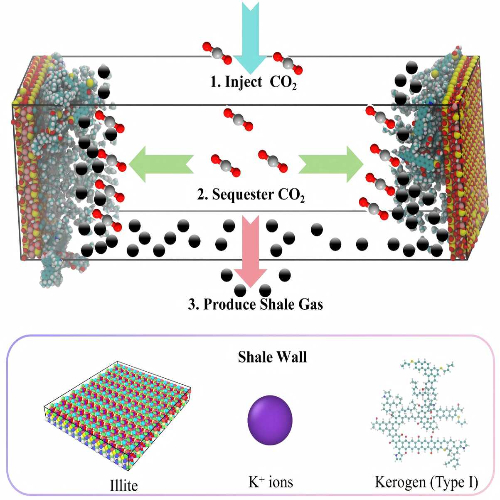
Ultra–deep shale geo–storage that couples secure CO2 sequestration with enhanced CH4 recovery demands explicit links from nanopore physics to reservoir–scale practice, yet how pore size and hybrid mineral-organic interfaces jointly govern CO2–CH4 competitive adsorption, mobility, and CH4 displacement under the Lower Cambrian Qiongzhusi temperature–pressure window remains insufficiently quantified; here we address this by molecular–dynamics simulations in composite illite–TypeI kerogen slit nanopores spanning 2–10nm and five reservoir state points—330.15K and 30MPa, 360.15K and 45MPa, 390.15K and 60MPa, 420.15K and 75MPa, 450.15K and 90MPa—and by extracting gas-surface interaction energies, cohesive–energy density, a dimensionless competitive–adsorption indicator, self–diffusion coefficients, near–wall density integration, and CH4 displacement efficiency during CO2 injection into CH4–saturated pores as constitutive inputs for dual–porosity⁄dual–permeability upscaling. Confinement amplifies selectivity: CO2 consistently outcompetes CH4 on both illite and kerogen, creating CO2–rich adsorption layers that nearly exclude CH4 from 2 nm surfaces; the competitive–adsorption indicator is ‹1 at 2nm (surface–dominated regime), rises to ≈1.3 at 4nm, and reaches ≈2.4–2.5 at 10nm at the highest temperature and pressure (mixed–fluid regime), while diffusion analysis shows CO2 remaining surface–bound and slower than CH4, which—once dislodged—resides in the central mixed fluid and is more mobile. Displacement metrics reveal a clear pore–width control: CH4 displacement efficiency increases from ≈70–77% (2nm) to ≈85-89% (10nm), peaks near 390.15K and 60MPa, and declines slightly at 450.15K and 90MPa as elevated temperature weakens adsorption; near–wall integration confirms persistent CO2 occupancy with a marked preference for illite across all conditions. Collectively, these pore–scale relations deliver a physically grounded design map for field deployment: (1) prioritize illite–rich, small–pore intervals to maximize durable CO2 trapping and storage security; (2) leverage larger nanopores (≥4–10 nm) as the mobility corridor for liberated CH4 to enhance deliverability; (3) schedule injections around moderate temperature and high pressure to balance displacement and retention; and (4) port the measured selectivity–width trends, cohesive–energy densities, diffusivity contrasts, near–wall occupancy fractions, and displacement curves directly into continuum simulators to forecast CO2–EGR performance and monitoring signatures in Qiongzhusi–type ultra–deep reservoirs by connecting atomistic mechanisms to engineering–relevant operating windows and upscaling parameters.

How to cite: Zhang, L., Yuan, C., Tan, X., Stupakova, A., and Song, Z.: Geo–Storage Across Scales: From Nanopore Theory to Reservoir Practice for CO2–Driven Methane Displacement in Ultra–Deep Illite–Kerogen Shales, EGU General Assembly 2026, Vienna, Austria, 3–8 May 2026, EGU26-85, https://doi.org/10.5194/egusphere-egu26-85, 2026.

14:25–14:35
|
EGU26-15844
|
ECS
|
On-site presentation
Boning Li, Ziqiing Pan, and Kaiqiang Zhang

Geological CO2 storage is a pivotal technology for achieving carbon neutrality. However, current assessments of storage potential predominantly rely on static volumetric methods or short-term simulations of dissolution processes. They often fail to adequately quantify the dynamic trapping capacity, particularly the actual contribution of mineral trapping, the dominant mechanism that ensures long-term permanence and enhanced security over centennial to millennial timescales.  This study developed a reactive transport modeling-based assessment framework to quantify the dynamic evolution and contribution of different trapping mechanisms, especially mineral trapping, over centennial timescales following CO₂ injection. A multiphase flow and reactive transport model, coupling CO₂-water-rock interactions, was established to simulate a 1000-year post-injection period for a typical reservoir A in China. The model integrates site-specific hydrogeological parameters and mineral reaction kinetics calibrated against experimental data. The simulation clearly reveals the sequential dominance of trapping mechanisms. Following injection cessation, the proportion of free-phase CO₂ decreases rapidly, while dissolution trapping increases significantly within the first century. Mineral trapping, the precipitation of carbonates such as calcite and dolomite, begins to contribute around 500 years and continues to grow, becoming the dominant mechanism for long-term security. This study proposes "effective mineral trapping capacity" as a time-dependent dynamic metric. In reservoir A, the amount of CO₂ immobilized through mineral reactions over a millennium far exceeds estimates based on short-term reactions, highlighting the necessity of long-term simulations to reveal the true storage potential. Besides, the simulation predicts the spatial evolution of CO₂ plume, trapping mechanism, formation pressure, and the impact of mineral reactions on porosity. This work provides a quantitative assessment of dynamic CO₂ mineralization potential through high spatio-temporal resolution reactive transport modeling. The findings elucidate the time-varying dominance of CO₂ trapping mechanisms for the design and risk management of CCUS project. Furthermore, it provides a transferable methodological framework for capacity evaluation and project optimization in similar or reactive reservoirs. This contributes to advancing the substantive deployment of long-term gigaton-scale, secure geological storage.

How to cite: Li, B., Pan, Z., and Zhang, K.: Dynamic CO₂ Storage Potential assessment via Reactive Transport , EGU General Assembly 2026, Vienna, Austria, 3–8 May 2026, EGU26-15844, https://doi.org/10.5194/egusphere-egu26-15844, 2026.

14:35–14:45
|
EGU26-6082
|
ECS
|
On-site presentation
Ishmael Yevugah and Antoine Jacquey
Accurate numerical simulation of salt cavern performance during underground geo‑energy storage of hydrogen, natural gas, compressed air, and CO2 requires the integration of precise design criteria into a rigorous mechanical constitutive framework. Ideally, this framework should be consistent, describing all mechanical loading (either short-term or long-term) deformations with a single parameter set. Due to methodological disconnects between experimental derivation of design criteria and constitutive laws, only a limited number of consistent constitutive models exist in the literature. The RTL2020 model exemplifies such a mechanical constitutive law by incorporating dilatancy both as a feature in the constitutive model and as a design criterion, enabling accurate prediction of short-term or long-term mechanical deformations, including volumetric strain, with a single parameter set. The novelty of the RTL2020 model lies in the dilatancy-induced volumetric strain, which shifts the focus of design criteria from merely surface deformations to encompass volumetric changes at the cavern wall, critical for precisely assessing salt cavern integrity and performance. This study presents a novel numerical implementation strategy for the RTL2020 model within an open-source numerical simulator, and captures the effectiveness of the dilatancy-based design criteria. The implementation approach employs an iterative stress–strain update algorithm that combines the Newton Raphson method with an adaptation of the classical implicit integration scheme (elastic predictor–inelastic corrector). This formulation ensures unconditional stability, rapid convergence, and high numerical accuracy at low computational cost. Validation against experimental data demonstrates the model’s ability to reproduce key rock salt behaviours, including the negligible influence of mean pressure on axial and deviatoric strain, and the strong dependence of volumetric strain on mean pressure, highlighting the robustness of our implementation. Ongoing application of the model will demonstrate its capability of handling parametric analysis of field-scale hydrogen storage conditions in single and multi cavern systems. Future investigations will integrate the RTL2020 model into fully coupled multiphysics frameworks (thermo-mechanical or hydro-mechanical) to simulate the more complex conditions characteristic of underground hydrogen storage. As an open-source implementation, the model provides the geomechanics community  with a broadly accessible and reliable consistent mechanical constitutive framework for salt cavern design in underground geo‑energy storage applications.

How to cite: Yevugah, I. and Jacquey, A.: Consistent Dilatancy-Based Constitutive Model of Rock Salt for Geo-Energy Storage Applications: An Open-Source Numerical Implementation, EGU General Assembly 2026, Vienna, Austria, 3–8 May 2026, EGU26-6082, https://doi.org/10.5194/egusphere-egu26-6082, 2026.

14:45–14:55
|
EGU26-5373
|
ECS
|
On-site presentation
Qizhang Fan, David Misch, Joel Bensing, Lukas Skerbisch, and Xiangyun Shi

The global energy system is transitioning to low-carbon solutions, with an increasing proportion of renewable energy sources. The intermittency of renewable energy generation, e.g. from wind and solar power, however, leads to a rising demand for large-scale and seasonal energy storage. Hydrogen is regarded as a vital energy carrier, and underground hydrogen storage (UHS) in porous geological media is considered a promising option due to its substantial storage capacity, relatively low cost, and potential safety benefits. Nonetheless, hydrogen leakage through caprock formations and hydrogen–rock–brine interactions remain critical uncertainties that require further research.

This study aims to investigate the impact of hydrogen injection on the sealing integrity of shale caprocks. High-pressure, constant-temperature batch reactor tests are employed to simulate gas–brine–rock interactions under reservoir-relevant conditions. Shale samples with three distinct mineralogical compositions (carbonate-, pyrite-, and clay mineral-rich) are selected to represent different types of caprock lithologies. Experiments are conducted using various gas compositions, including hydrogen and potential cushion gases, to evaluate how mineralogical heterogeneity influences geochemical reactions and caprock performance.

The ongoing experiments aim to identify the most suitable (i.e. hydrochemically stable) caprock composition for underground hydrogen storage, as well as gas compositions that are more favorable as cushion gases to enhance storage safety. The results are expected to provide insights into caprock stability and sealing behavior during future hydrogen storage operations.

How to cite: Fan, Q., Misch, D., Bensing, J., Skerbisch, L., and Shi, X.: Hydrochemical Stability of Shale Caprocks During Underground Hydrogen Storage (UHS), EGU General Assembly 2026, Vienna, Austria, 3–8 May 2026, EGU26-5373, https://doi.org/10.5194/egusphere-egu26-5373, 2026.

14:55–15:05
|
EGU26-2523
|
ECS
|
On-site presentation
Kexin Du and Songyan Li

Geological CO2 storage during CO2-enhanced oil recovery (CO2-EOR) is a promising approach to simultaneously increase hydrocarbon production and mitigate carbon emissions. In this study, the potential of CO2 huff-n-puff for heavy oil cold production and its associated CO2 sequestration efficiency is experimentally evaluated. Five CO2 huff-n-puff cycles were conducted at different injection pressures to determine the heavy oil recovery factor and CO2 storage efficiency, and comparative tests were performed using N2 and CH4 huff-n-puff and viscosity-reducer-assisted CO2 huff-n-puff. The results demonstrate that both heavy oil recovery factor and CO2 storage efficiency increase with injection pressure and cycle number. At an injection pressure of 20 MPa, the cumulative oil recovery factor and CO2 storage efficiency are 39.23% and 28.97%, representing increases of 14.61% and 16.76%, respectively, relative to 8 MPa. CO2 exhibits the highest dissolved gas–oil ratio in heavy oil among the three gases tested at 16 MPa, and the resulting heavy oil recovery factor after CO2 huff-n-puff are 3.59 and 1.86 times those obtained with N2 and CH4, respectively. The cumulative oil recovery factor and total oil exchange ratio are 10.12% and 1.76 t/t for N2, 36.41% and 1.17 t/t for CO2, and 19.57% and 4.96 t/t for CH4. The heavy oil recovery factor is increased by approximately 3.24%–6.45%. These findings provide quantitative guidance for optimizing injection pressure and gas selection in CO2 huff-n-puff schemes, thereby supporting the design and implementation of CCUS-oriented geological storage in heavy oil reservoirs.

How to cite: Du, K. and Li, S.: Experimental investigation of CO2 huff-n-puff for improving heavy oil recovery and CO2 underground storage, EGU General Assembly 2026, Vienna, Austria, 3–8 May 2026, EGU26-2523, https://doi.org/10.5194/egusphere-egu26-2523, 2026.

15:05–15:15
|
EGU26-8992
|
ECS
|
On-site presentation
Xiaochu Wang, Wei Guo, Xiuping Zhong, and Xv Zhang

Utilizing winter natural cold energy for shallow CO2 hydrate sequestration offers a sustainable, energy-efficient pathway for carbon neutrality. However, the upscale application of this technology requires a comprehensive understanding of both microscopic host-sediment interactions and macroscopic reservoir performance. This study integrates laboratory experiments with field-scale numerical simulations to evaluate the feasibility and safety of storing CO2 in zeolite-bearing sediments under seasonally frozen conditions.

In the experimental phase, a visualized high-pressure reactor was employed to investigate CO2 hydrate formation and dissociation characteristics across three sediment types: quartz sand, montmorillonite, and zeolite. Influencing factors including particle size, water saturation, and diverse P-T conditions were systematically analyzed. Results quantified that zeolite sediments significantly outperformed traditional media, shortening the hydration induction time by 17.6% and increasing gas storage capacity by 21.3% compared to quartz sands. This enhancement is attributed to the "molecular sieve" effect and high specific surface area of zeolite. Microscopic characterizations using NMR, XRD, and SEM further revealed that the unique microporous framework of zeolite provides abundant nucleation sites and exerts a strong self-preservation effect, which prolonged the hydrate dissociation window by over 1.20 hours at -5°C, providing a critical safety margin against accidental thermal fluctuations.

Complementing the laboratory findings, a field-scale reservoir model was constructed using the CMG software to simulate the long-term injection and storage process in a pilot area in Northeast China. The simulation coupled thermal-hydraulic-chemical (THC) processes to predict the evolution of the temperature field and the spatial distribution of the hydrate stability zone. Simulation results indicated that utilizing natural cold energy (ambient air temperature of -20°C) could sustain a stable HSZ with a radius of 200 meters around the wellbore. Furthermore, the model validated that the exothermic heat of hydration was effectively dissipated by the continuous cold energy supply, preventing thermal instability. Sensitivity analysis within CMG demonstrated that the leakage risk in zeolite-rich layers was reduced by 15.89% compared to conventional aquifers due to the dual trapping mechanism of solid hydrate formation and adsorptive trapping.

This study elucidates the coupled mechanism of "Cold Energy Drive + Zeolite Enhancement", confirming that zeolite is an ideal functional medium for shallow CO2 sequestration. The findings provide robust theoretical support and quantitative design parameters for implementing low-cost CCS projects in cold regions.

Keywords: CO2 Sequestration; Natural Cold Energy; Zeolite; CMG Simulation; Self-preservation; Multiscale Analysis

How to cite: Wang, X., Guo, W., Zhong, X., and Zhang, X.: Multiscale Study on Shallow CO2 Sequestration via Winter Natural Cold Energy: From Zeolite-Mediated Hydrate Kinetics to Field-Scale Simulation, EGU General Assembly 2026, Vienna, Austria, 3–8 May 2026, EGU26-8992, https://doi.org/10.5194/egusphere-egu26-8992, 2026.

15:15–15:25
|
EGU26-10001
|
On-site presentation
Niklas Heinemann and Harri Williams

Hydrogen is an expensive and relatively scarce commodity. However, its storage—both to increase renewable energy efficiency by reducing curtailment and to support a zero-carbon energy system that reduces reliance on energy imports—appears inevitable. This raises a key question: how can the high upfront costs and substantial hydrogen volumes required for subsurface storage be reduced? One of the main cost drivers is the need for hydrogen cushion gas, which, depending on the techno-economic analysis, can account for up to 80% of the initial investment costs.

In this talk, we present two approaches to improve the competitiveness of hydrogen storage. First, drawing on lessons learned from the ACT Acorn CO₂ storage project, we explore the potential of a staged investment strategy. The central idea is to initiate storage operations at a small scale, requiring relatively modest volumes of cushion gas, while retaining the option to upscale if early phases prove successful and safe, efficient storage is demonstrated.

Second, we introduce a new conceptual model that allows hydrogen cushion gas to be replaced with cheaper and more readily available alternatives. The primary function of cushion gas is to provide compression during working gas injection and pressure support during production. We propose a strategy in which cushion gas (in this case CO₂) and working gas are spatially separated, preventing mixing or chemical reactions while still delivering the pressure support required for efficient operation.

We use the Long Clawson field in the East Midlands, UK, as a case study to demonstrate the theoretical feasibility of this approach. The field of interest is relatively shallow (approximately 680 m) and comprises several reservoir layers with an average thickness of ~10 m. Using an efficient black-oil simulator, reservoir modelling is employed to test and optimise the feasibility of cyclic hydrogen storage within these layers.

This work forms part of the East Midlands Storage (EMStor) project, a Strategic Innovation Fund–supported feasibility study focused on the development of hydrogen storage in repurposed hydrocarbon fields.

How to cite: Heinemann, N. and Williams, H.: An Innovative Approach to Reducing Upfront Costs in Hydrogen Storage via Cushion–Working Gas Separation, EGU General Assembly 2026, Vienna, Austria, 3–8 May 2026, EGU26-10001, https://doi.org/10.5194/egusphere-egu26-10001, 2026.

15:25–15:35
|
EGU26-12322
|
ECS
|
On-site presentation
Guangshun Xiao, Qinhong Hu, Fang Hao, Tao Zhang, Qiwei Zong, Qiming Wang, Hongguo Qiao, and Shengyu Yang

Green-hydrogen geological storage, geological sequestration of CO₂, and the generation, accumulation, and potential reservoir formation of natural hydrogen and methane involve a broad spectrum of lithologies, including sandstone, carbonate rock, shallow mudstone, halite (salt rock), serpentinite, basalt, granite, coal, and deep organic-rich shale. Marked contrasts in rock physical properties and pore-structure attributes can strongly regulate macroscopic gas diffusion. Therefore, elucidating gas diffusion behavior across different rock types is essential for evaluating gas storage capacity and geologic trapping potential.

In this work, representative rock samples were crushed to 0.50–0.841 μm particles and tested using a self-developed experimental setup to characterize the diffusion behaviors of H₂, CH₄, and CO₂ at 0.5 MPa. Depending on the observed diffusion features, diffusion coefficients were quantified using both unipore and dual-porosity (bidisperse) diffusion models. Pore-structure characteristics were independently constrained by N₂ physisorption, mercury intrusion porosimetry, and scanning electron microscopy, enabling a systematic assessment of pore-structure controls on gas diffusion. Additional experiments were performed on selected samples to compare diffusion coefficients under varying conditions of temperatures and pressures.

The results demonstrate pronounced inter-gas and inter-lithology differences in diffusion behavior, arising from contrasts in gas properties and rock pore structures. Overall, H₂ diffuses the fastest, followed by CH₄, whereas CO₂ exhibits the slowest diffusion. In micropores-rich rocks, CO₂ shows a distinct “fast initial–slow late-stage” diffusion pattern. Furthermore, diffusion coefficients increase with increasing temperatures but decrease with increasing gas pressures.

These findings reveal lithology-dependent response mechanisms in governing gas diffusion and provide a scientific basis for understanding gas migration in deep geological environments. The results also deliver key experimental constraints for studies of natural hydrogen and methane accumulation and for the assessment and optimization of geological CO₂ sequestration.

Acknowledgement: This work was supported by the Basic Science Center Program of the National Natural Science Foundation of China (NSFC) (Type A; No. 42302145).

How to cite: Xiao, G., Hu, Q., Hao, F., Zhang, T., Zong, Q., Wang, Q., Qiao, H., and Yang, S.: Comparative Diffusion Characteristics of Hydrogen, Methane, and Carbon Dioxide in Different Rock Types, EGU General Assembly 2026, Vienna, Austria, 3–8 May 2026, EGU26-12322, https://doi.org/10.5194/egusphere-egu26-12322, 2026.

15:35–15:45
|
EGU26-1490
|
ECS
|
On-site presentation
Lin Wu, Junzhang Lin, Yiran Jiang, Dandan Yu, Li Ren, Zhengmeng Hou, Li Fu, Zhifeng Luo, and Xiaochuan Xu

Underground bio-methanation (UBM) of CO2 and H2 in depleted hydrocarbon reservoirs presents a promising strategy that combines carbon recycling, large-scale subsurface energy storage, and renewable CH4 production. Despite its potential, the bio-reactive transport mechanisms underlying UBM remain poorly understood. To fill this knowledge gap, this study develops a numerical modeling framework. A coupled hydro-bio model was developed by integrating multicomponent multiphase flow with microbial growth and conversion processes, and was implemented numerically using the MATLAB Reservoir Simulation Toolbox (MRST). Key microbial kinetic parameters were calibrated using data from high-temperature and high-pressure conversion experiments conducted with formation water containing indigenous methanogenic microorganisms from the Shengli Oilfield, China. Within this this framework, the effects of operational and reservoir parameters, including shut-in duration, injection rate, and reservoir permeability, on gas transport, microbial conversion, and production performance were systematically investigated. Simulation results indicate that extended shut-in periods allow methanogens to continuously consume CO2 and H2, leading to greater pressure depletion and lower residual CO2 in the gas phase. Specifically, increasing the shut-in duration from 180 to 720 days raises the final microbial CO2 conversion from 43.5% to 96%. Higher injection rates extend the gas-front migration distance and stimulate a larger methanogen population, increasing the total CO2 conversion, although the overall conversion efficiency slightly decreases due to higher gas input. In high-permeability reservoirs, enhanced gravity segregation causes gases to accumulate in the upper reservoir, limiting contact with methanogens near the far-well region and thereby reducing conversion efficiency. This study provides new insights into the coupled transport and microbial processes in UBM and offers guidance for the optimization of its design and field-scale implementation.

How to cite: Wu, L., Lin, J., Jiang, Y., Yu, D., Ren, L., Hou, Z., Fu, L., Luo, Z., and Xu, X.: Numerical analysis of bio-reactive transport in CO2-H2 underground bio-methanation within depleted reservoirs, EGU General Assembly 2026, Vienna, Austria, 3–8 May 2026, EGU26-1490, https://doi.org/10.5194/egusphere-egu26-1490, 2026.

Posters on site: Thu, 7 May, 08:30–10:15 | Hall X4

The posters scheduled for on-site presentation are only visible in the poster hall in Vienna. If authors uploaded their presentation files, these files are linked from the abstracts below.
Display time: Thu, 7 May, 08:30–12:30
Chairpersons: Ziqing Pan, Xiangyun Shi
X4.80
|
EGU26-2355
|
ECS
Zhikai Liang and Guangyou Zhu

The nanopores in organic matter (OM) in shale are considered to be the main storage space for methane. However, there is still limited understanding of the role of OM in underground hydrogen storage(UHS) in retaining shale gas reservoirs. To investigate the influence of kerogen on hydrogen storage, this study employs multiple spectroscopic techniques (solid-state 13C nuclear magnetic resonance, Fourier transform infrared spectroscopy, and X-ray photoelectron spectroscopy) to establish macromolecular structure models of kerogens of high and over-mature stages. Using molecular simulation techniques (GCMC and MD methods), the adsorption characteristics of hydrogen on kerogen under conditions of 333.15 K-393.15 K and 0-30 MPa are studied. The result shows: Longmaxi kerogen is carbon-dominant (>80%), featuring an extensive aromatic framework in over-mature stages. The high content of protonated and branched aromatic carbon, alongside a well-developed graphite (002) crystal plane, confirms high graphite-like crystallinity in over-mature structures. CH4/H2 competitive adsorption is primarily governed by van der Waals forces. CH4 molecule exhibits stronger surface affinity, preferentially occupying high-energy sites with densities exceeding twice the bulk phase. Conversely, H2 interactions are extremely weak, primarily controlled by pore space confinement and thermodynamic conditions, leading to a bulk-phase distribution. CH4/H2 selectivity decreases with pressure. The limited impact of maturity on selectivity reflects the stability of the dispersion-dominated mechanism. CO2 molecule exhibits strong electrostatic and inductive interactions with polar functional groups. This leads to markedly higher isosteric heats and selectivity compared to the CH4 system. The CO2 molecule exhibits strong electrostatic and inductive interactions with polar groups and aromatic structures, showing significantly higher isosteric heat and selectivity coefficients compared to the CH4/H2 system. The CO2 molecule has the lowest diffusion coefficient due to stable adsorption configurations and long residence times. At high pressures, a pore confinement effect restricts the H2 molecule mean free path, increasing collision resistance and reducing its effective diffusion rate. These findings provide critical theoretical support for assessing the safety and capacity of large-scale UHS in depleted shale gas reservoirs.

How to cite: Liang, Z. and Zhu, G.: Study of the macromolecular structure of kerogen for CO2/H2 and CH4/H2 competitive adsorption capacity: 3D molecular reconstruction, spectroscopic experiments, molecular simulations, EGU General Assembly 2026, Vienna, Austria, 3–8 May 2026, EGU26-2355, https://doi.org/10.5194/egusphere-egu26-2355, 2026.

X4.81
|
EGU26-4436
Lu Liu, Lianbo Zeng, and Xiang Li

During hydrogen storage in tight sandstone gas reservoirs, the injection of low-temperature, high-pressure hydrogen induces thermal stress through cold shock, which significantly influences the initiation and propagation of fractures within the reservoir. However, the evolution characteristics of the stress and temperature fields in high-temperature rock matrix, as well as the initiation and propagation patterns of fractures under the coupled effects of low-temperature-induced thermal stress and in-situ stress, remain unclear. Therefore, a thermal-hydraulic-mechanical-damage coupling model was established to analyze the evolution characteristics of the stress and temperature fields in reservoir rocks, along with fracture propagation patterns, under varying stress conditions and injection temperatures. The results indicate that fractures propagate predominantly along the direction of the maximum principal stress. Additionally, larger temperature differences and smaller in-situ stress differentials favor the formation of complex fracture networks. This study holds significant implications for the safety and stability of hydrogen storage in depleted gas reservoirs.

How to cite: Liu, L., Zeng, L., and Li, X.: Numerical Simulation of Fracture Propagation Characteristics Under Thermal-Hydraulic-Mechanical-Damage Coupling Effects During Hydrogen Storage in Tight Sandstone Gas Reservoirs, EGU General Assembly 2026, Vienna, Austria, 3–8 May 2026, EGU26-4436, https://doi.org/10.5194/egusphere-egu26-4436, 2026.

X4.82
|
EGU26-8610
|
ECS
Xu Yang and Kaiqiang Zhang

The urgent need to mitigate anthropogenic CO2 emissions necessitates the advancement of large-scale, permanent carbon sequestration technologies. Geothermal systems, with their unique thermo-hydro-chemical conditions, are increasingly recognized as promising environments for CO2 mineralization, with porous carbonate reservoirs serving as ideal storage formations. At the mineral-fluid interface, nanoscale water films act as a critical reactive microenvironment. These films exhibit pronounced size and confinement effects regarding thickness, ionic composition, and pH, which fundamentally dictate mineral dissolution, nucleation, and phase transformation. However, the molecular mechanisms governing cation mobilization and the associated rate-limiting steps within these nanoconfined films remain poorly understood. In this study, we developed a computational framework integrating Density Functional Theory (DFT) and Ab Initio Molecular Dynamics (AIMD), coupled with enhanced sampling techniques to capture rare events, such as proton transfer and ligand exchange, at the electronic level. Using calcite and dolomite as representative carbonate phases, we constructed slab models for the (104) and (110) surfaces. By systematically varying the water film thickness, we simulated the transition from molecular monolayers to continuous thin films. We investigated the heterogeneous reaction mechanisms of CO2 and H2O on these surfaces, elucidating the cation de-coordination pathways, rate-limiting steps, and the characteristics of transient intermediates. Our quantitative evaluation reveals that nanoconfinement introduces a unique free-energy landscape for mineral dissolution. Specifically, the highly structured water layers in ultra-thin films significantly modulate the solvation shells of Ca2+/Mg2+ ions, leading to a thickness-dependent shift in activation barriers. Furthermore, the simulations demonstrate that elevated geothermal temperatures and increased ionic strength synergistically facilitate cation mobilization by lowering the activation enthalpy. We also identified that specific ligand adsorption promotes the formation of inner-sphere complexes, which destabilize surface lattice sites and accelerate dissolution. Notably, the (110) surface exhibits higher kinetic reactivity than the (104) plane due to its lower coordination environment and higher density of reactive sites. These findings provide a robust mechanistic bridge between molecular-scale interfacial processes and macro-scale mineralization kinetics, offering critical theoretical insights for optimizing carbon sequestration efficiency in geothermal reservoirs.

How to cite: Yang, X. and Zhang, K.: Molecular-scale mechanisms of carbonate mineralization in nanoscale water films in geothermal reservoir, EGU General Assembly 2026, Vienna, Austria, 3–8 May 2026, EGU26-8610, https://doi.org/10.5194/egusphere-egu26-8610, 2026.

X4.83
|
EGU26-9137
|
ECS
Lena-Maria Able, Eric Salomon, Florian Duschl, and Michael Drews

Density and porosity are key parameters in the petrophysical characterization of rock samples. To calculate those properties, the determination of the envelope volume of a rock sample is of central importance. Frequently used methods for unregularly shaped sample pieces are immersion-weighting or mercury porosimetry. For soluble or swellable rock samples an envelope density analyzer is frequently used, which measures the displacement of fluid-like particles to determine the envelope volume. This study investigates a new approach to derive the envelope volume of sample pieces, by directly capturing the surface of a rock, using a 3D micro-scanner. The device uses the triangulation principle to recreate the rock sample, and thus the volume, out of a recorded point cloud in a three dimensional coordinate system. The suitability and reproducibility for different surface properties were evaluated testing various materials (sedimentary rocks, igneous rocks, metamorphic rocks) and by comparing the results to those using an envelope density analyzer. The results show that optical 3D micro-scanning provides a higher reproducibility than the standard envelope density analyzer. Particularly accurate data can be expected for samples with a low surface roughness, regardless of the color and brightness, while recessed angles or shiny surfaces increase inaccuracy, but still with a comparable high reproducibility. Overall, optical 3D micro-scanning provides a fast and robust method to determine the envelope volume of rock samples.

How to cite: Able, L.-M., Salomon, E., Duschl, F., and Drews, M.: Optical 3D micro-scanning for the determination of the envelope volume of rock samples, EGU General Assembly 2026, Vienna, Austria, 3–8 May 2026, EGU26-9137, https://doi.org/10.5194/egusphere-egu26-9137, 2026.

X4.84
|
EGU26-17169
|
ECS
Xiangzhi Zhang, Zhaoyun Zong, Xiaojian Zhu, and Yalong Fan

Carbon dioxide geological storage stands as one of the core technologies for attaining carbon neutrality goals, with time-lapse seismic emerging as the key technique for monitoring. As a robust fluid factor, the effective fluid bulk modulus can delineate the spatial distribution of stored carbon dioxide in geological formations. Elastic inverse scattering theory has been extended to carbon dioxide geological storage monitoring leveraging time-lapse seismic data. Within the framework of elastic scattering theory, the baseline medium is defined as the reference medium, while the monitoring medium corresponds to the perturbed medium. The discrepancy in subsurface physical properties between the baseline and monitoring medium is treated as the property variation between the reference and perturbed medium. The baseline and monitoring seismic data are regarded as the background wavefields and measured full wavefields, respectively, and the differential data is designated as the scattered wavefields. Based on the above hypothesis, we derive a linearized and qualitative approximation of reflectivity variation using perturbation theory, with this variation being explicitly correlated to changes in the effective fluid bulk modulus. By incorporating the seismic wavelet effect into the reflectivity approximation as the forward solver, we further propose a practical pre-stack inversion approach within a Bayesian framework. This approach enables the direct estimations of effective fluid bulk modulus changes from time-lapse seismic data. The efficacy of the proposed approach is validated via examples, which demonstrate that it can yield stable estimations of effective fluid bulk modulus variation, thereby providing a novel technical means for monitoring changes during carbon dioxide geological storage.

How to cite: Zhang, X., Zong, Z., Zhu, X., and Fan, Y.: Carbon dioxide geological storage monitoring based on effective fluid bulk modulus with time-lapse seismic data, EGU General Assembly 2026, Vienna, Austria, 3–8 May 2026, EGU26-17169, https://doi.org/10.5194/egusphere-egu26-17169, 2026.

X4.85
|
EGU26-7058
|
ECS
Yuxing Zeng and Yanzhong Wang

Since 2017, China has actively promoted the exploration of deep coal seams as unconventional natural gas reservoirs. However, the petrographic composition, pore–fracture structure, and gas occurrence characteristics of deep coal reservoirs remain poorly constrained, particularly under in-situ formation depth conditions. The deep coal seams of the Carboniferous Benxi Formation along the eastern margin of the Ordos Basin exhibit favorable reservoir development conditions and high gas productivity, making them an ideal target for investigating reservoir characteristics and gas-bearing mechanisms of deep coalbed methane (CBM). In this study, the petrographic composition, physical properties, pore–fracture structure, and gas occurrence states of coal reservoirs were systematically investigated through macroscopic observation and classification of coal lithotypes, combined with scanning electron microscopy (SEM), multi-component gas adsorption experiments, overburden pressure porosity–permeability measurements, and variable temperature–pressure adsorption tests. The reservoir characteristics and gas occurrence patterns of deep coal reservoirs were thereby elucidated. The results indicate that the macroscopic coal lithotypes of the Benxi Formation include bright coal (types I、II、III), semi-bright coal (types I、II、III), semi-dull coal (types I–II), and dull coal (types I–II), with bright coal being dominant. The average vitrinite contents of vitrain, clarain, and durain are 94.6%, 85.26%, and 58.8%, respectively, while the corresponding average fixed carbon contents (air-dried basis) are 79.6%, 72.6%, and 34.15%. The average maximum vitrinite reflectance ranges between 1.75% and 2.56%, indicating a high- to over-mature coal rank. Reservoir space is primarily composed of gas pores, cellular pores, and cleat fractures, with micropores and microfractures of 0.5–1.2 nm contributing the dominant pore volume. The average total pore volume of clarain and durain ranges from 0.0299–0.034 cm³/g and 0.014–0.025 cm³/g, respectively, with clarain II exhibiting the largest pore volume. The average permeability and porosity of clarain and durain are 0.623 mD and 5.23%, respectively. Natural fractures significantly enhance permeability under overburden pressure conditions, whereas artificial fractures exert negligible influence. Gas in deep CBM reservoirs occurs in both adsorbed and free states. With increasing burial depth, free gas content increases, adsorbed gas content first increases and then decreases, and total gas content either increases or remains relatively stable. Coal with higher vitrinite and inertinite contents, as well as a higher proportion of clarain, exhibits greater gas content. Under in-situ formation depth conditions, the measured total gas content of the Benxi Formation coal is lower than the theoretical maximum gas adsorption capacity.

Keywords: Ordos Basin; coalbed methane; in-situ formation; Benxi Formation; coal lithotype; reservoir space; pore–fracture structure; gas occurrence characteristics

How to cite: Zeng, Y. and Wang, Y.: Reservoir Characteristics and Gas Occurrence Patterns of Deep Coalbed Methane in the Benxi Formation, Eastern Margin of the Ordos Basin, EGU General Assembly 2026, Vienna, Austria, 3–8 May 2026, EGU26-7058, https://doi.org/10.5194/egusphere-egu26-7058, 2026.

X4.86
|
EGU26-16561
|
ECS
Xiaoyang Zhang, Haihua Zhao, Chen Xu, Feng Zhang, Xiaojun He, and Shaogui Deng

Carbon capture, utilization, and storage (CCUS) is widely recognized as a key technological pathway for mitigating greenhouse gas emissions and supporting the global energy transition. Among CCUS applications, carbon dioxide enhanced oil recovery (CO₂-EOR) plays an important role by simultaneously improving hydrocarbon recovery and enabling geological storage of CO₂. During CO₂ flooding, reservoir pores typically contain a three-phase fluid system composed of water, oil, and supercritical CO₂, which poses significant challenges for fluid discrimination and saturation evaluation. In particular, quantitative differentiation between CO₂ and oil remains difficult under three-phase conditions because of weak nuclear-physics contrasts and strong environmental interference, limiting the reliability of current neutron logging interpretations.

Neutron gamma logging tools equipped with multiple detectors provide inelastic and capture gamma responses that are sensitive to elemental composition and fluid properties, offering potential for three-phase fluid evaluation. To establish a physically consistent basis for fluid discrimination, Monte Carlo simulations based on the FLUKA code are performed to systematically investigate the response characteristics of near- and far-detector inelastic gamma spectra, as well as near–long detector capture gamma count ratios, for pure water, oil, and supercritical CO₂ under varying porosity conditions in sandstone formations. Based on the simulation results, quantitative relationships between carbon-to-oxygen (C/O) ratios, capture gamma count ratios, and porosity are established. A dual-parameter fluid evaluation method that combines C/O and capture gamma information is then proposed to effectively distinguish water, oil, and CO₂ over a wide porosity range.

In addition, the influences of borehole fluid, formation water salinity, lithological mineral composition, and clay content on neutron gamma responses are systematically analyzed. The results indicate that the presence of CO₂ in the borehole can significantly distort inelastic gamma measurements and bias the apparent C/O response. To mitigate this effect, a self-compensation correction method based on the near-to-far inelastic gamma count ratio is developed to suppress borehole CO₂ interference.

Finally, multiple formation models with varying porosity, clay content, and fluid combinations are constructed to simulate C/O ratios, capture gamma counts, and related the evaluation based on the combination of two parameters. The simulation results demonstrate the effectiveness of the proposed dual-parameter evaluation method and the borehole CO₂ self-compensation approach. This study provides a physically based framework for improving the interpretation of neutron gamma logging data in CO₂ flooding and CCUS-related reservoir monitoring.

Keywords: neutron gamma logging; carbon–oxygen ratio; capture gamma count ratio; CO₂ flooding; CCUS monitoring

How to cite: Zhang, X., Zhao, H., Xu, C., Zhang, F., He, X., and Deng, S.:  A three-phase fluid distinguishing method based on dual-parameter from neutron gamma logging technology in CO2 enhanced oil recovery, EGU General Assembly 2026, Vienna, Austria, 3–8 May 2026, EGU26-16561, https://doi.org/10.5194/egusphere-egu26-16561, 2026.

X4.87
|
EGU26-18688
|
ECS
Shitan Ning, Xianglu Tang, Zhenxue Jiang, Shu Jiang, David Misch, and Xinlei Wang

Abstract: High water saturation in shale reservoirs represents a critical challenge for hydraulic fracturing efficiency and gas productivity. Understanding the genesis and evolution of shale formation water is essential for predicting "sweet spots" and managing water production. In this study, we established a systematic theoretical framework for the multigenetic origins of shale water by analyzing the hydrochemical characteristics, Hydrogen-Oxygen-Strontium (H-O-Sr) isotopes, and fluid inclusion data derived from fracturing flowback fluids and associated calcite veins in the Sichuan Basin. Our results classify shale formation water into two distinct genetic categories: Native Water and Exogenous Water. Native water comprises sedimentary residual water, characterized by high salinity and paleo-seawater isotopic signatures, and mineral transformation water released during clay diagenesis and hydrocarbon generation. Conversely, Exogenous water is injected into the reservoir via fracture networks. By integrating structural analysis, we identified three exogenous subtypes: (1) Deep hydrothermal fluids, evidenced by radiogenic Sr isotopes and high-temperature mineral assemblages along strike-slip faults; (2) Meteoric water infiltration facilitated by shallow "open" faults; and (3) Inter-layer formation water migrating through vertical fault conduits. We propose that the actual shale water system is a dynamic product of fluid mixing and fluid-rock interactions controlled by tectonic styles. Structural deformation not only drives the vertical injection of external fluids but also regulates the lateral migration of fluids along bedding planes, resulting in significant heterogeneity in water saturation (e.g., fluid enrichment in structural lows). Case studies in the Weiyuan and Dingshan blocks demonstrate how deep hydrothermal upwelling and atmospheric precipitation alter the primordial connate water, creating complex fluid systems containing magmatic or metamorphic signals. This study elucidates the macro-background of pore-surface fluid-rock interactions and provides a geochemical basis for evaluating the pore water distribution in high water-bearing shale gas plays.

Keywords: Shale Formation Water; Isotopes; Flowback Fluids; Fluid-Rock Interaction; High Water-Bearing Reservoirs

How to cite: Ning, S., Tang, X., Jiang, Z., Jiang, S., Misch, D., and Wang, X.: Origins and Evolution Mechanisms of Shale Formation Water in the Sichuan Basin: Insights from Hydrochemistry, Isotope Tracing, and Structural Analysis, EGU General Assembly 2026, Vienna, Austria, 3–8 May 2026, EGU26-18688, https://doi.org/10.5194/egusphere-egu26-18688, 2026.

Please check your login data.